

Alfred Waterhouse was not just a talented architect who reproduced the Gothic style across Great Britain; he truly reinterpreted it for a new era. Many Manchester residents might not have known his name, but they have certainly seen his architectural masterpieces. Manchester Town Hall, London’s Natural History Museum – all are his work. Waterhouse didn’t just design beautiful buildings. He captured the spirit of the age in his architecture, with its faith in progress, respect for tradition, and love for detail. More at manchester-future.
Moreover, thanks to him, Gothic became fashionable again, but no longer ancient and gloomy, but modern and functional. He showed that architecture could be simultaneously beautiful and practical. Waterhouse became one of those who gave the streets of Victorian Britain their recognisable look.
What is known about Alfred Waterhouse and his family?
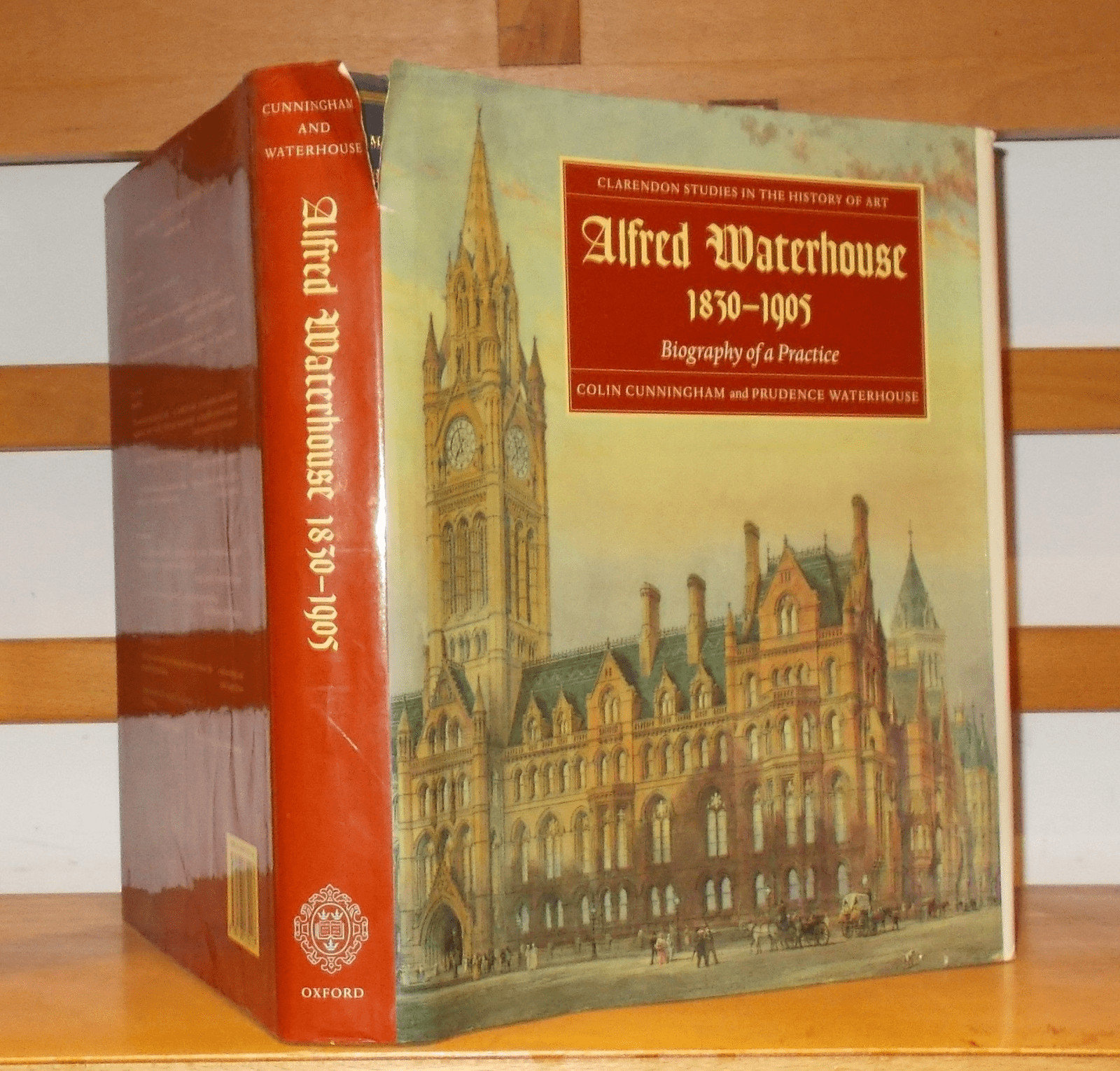
Alfred Waterhouse was born in 1830 in Liverpool into a Quaker family. His father, Alfred Waterhouse Sr., worked as a cotton broker, and his mother, Mary Bevan, came from Tottenham. Alfred was the eldest of eight children. Shortly after his birth, the family moved to Oakfield, a country house in Aigburth, near Liverpool.
It should also be noted that the Waterhouse family was successful. Specifically, his brother Edwin became one of the founders of the international accountancy firm “Price Waterhouse”, and his other brother, Theodore, founded a law firm that later became part of “Field Fisher Waterhouse”.
Education
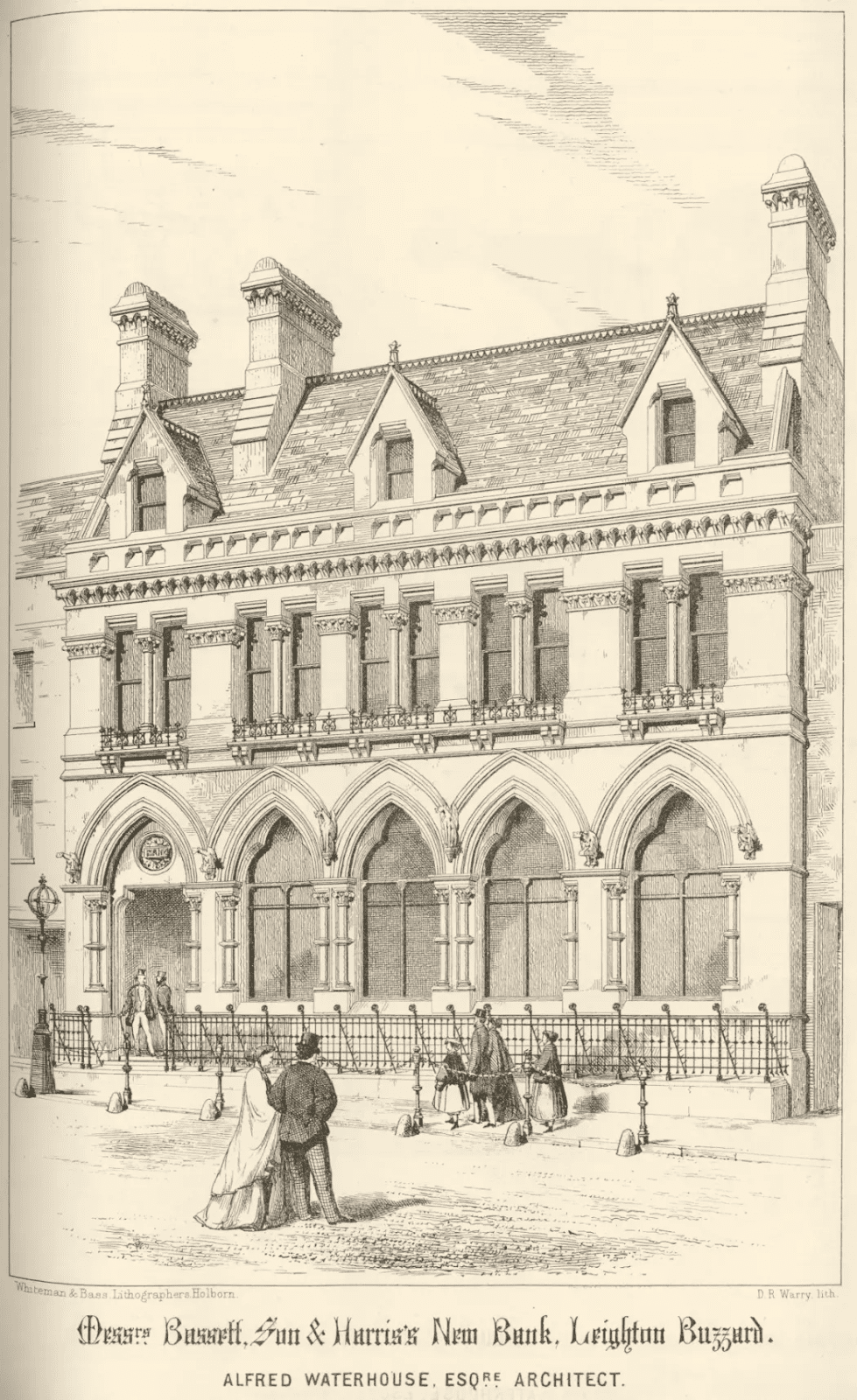
Waterhouse was educated at the Quaker “Grove House School” in Tottenham, which later became known as “Leighton Park School”. After this, he began to study architecture. In the 1840s, he moved to Manchester, where he trained under the architect Richard Lane. A feature of his initial architectural education was that he was taught to draw strictly and with restraint, using clear lines and muted tones. However, Waterhouse later decided to go beyond the accepted standards and find his own style. He was inspired by books on architecture, such as the treatises of William Chambers, Augustus Pugin, and especially the works of John Ruskin, which praised the Gothic style.
He learned actively through sketching. Specifically, he copied elements from Gothic and Classical buildings, reflecting on different architectural approaches. His notebooks have survived to this day and show how he critically re-evaluated what he read and saw.
In 1853, Waterhouse embarked on an architectural tour of Europe. For nine long months, he explored France, Switzerland, and Italy. He sketched cathedrals, palaces, and towers, capturing the aesthetic of ancient cities. He later said that such trips teach one not just to copy, but to understand architecture on an intuitive level.
Upon returning to his native Great Britain, he opened his own architectural practice in Manchester in 1854. This marked the start of his independent career and the first step towards changing the face of Victorian Britain.
What is the Gothic Revival?
The Gothic Revival was a 19th-century architectural movement that sought to revive the styles of medieval Gothic architecture: pointed arches, spires, ribbed vaults, intricate carvings, and dramatic silhouettes. But it was not just about copying old buildings. It was about returning spirit, mystery, and architectural grandeur to a world that was becoming increasingly mechanistic.
What set Waterhouse apart among the Gothic Revivalists was his versatility. He was not bound by rules. He could be grand when the job demanded it, but also restrained. And above all, he understood the practical needs of the modern city.
The start of a major architectural career in Manchester
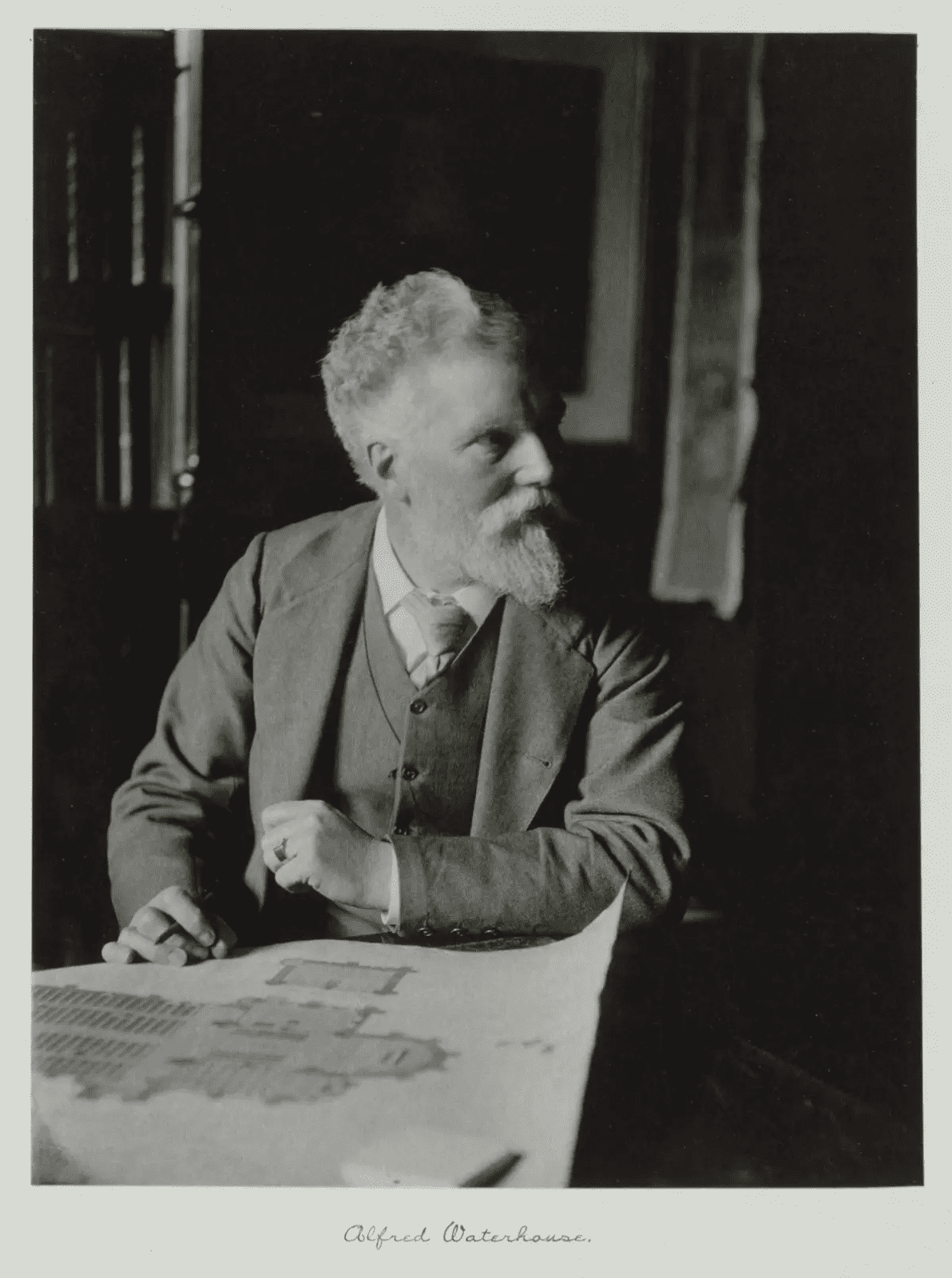
Waterhouse developed his architectural practice in Manchester for 11 years. At that time, his projects were mostly realised in the northern part of England. He started with private commissions: remodelling relatives’ homes and designing stables for his father. Gradually, he moved on to more significant projects, such as chapels and cemetery buildings in Ince-in-Makerfield, where his interest in the Gothic style already became apparent.
The first commercial building Waterhouse designed was a warehouse and sugar refinery in Manchester. He designed it in the Italianate style. He also created educational institutions, for example, institutes in Droylsden and Bingley, which combined a utilitarian function with Gothic elements.
His first major country house project was Hinderton Hall in Cheshire. It was a restrained but elegant Gothic mansion. Later, he built more large-scale private homes, such as New Heys in Liverpool, which included not only living quarters but also a conservatory, stables, and even custom-designed furniture.
Among Waterhouse’s clients were wealthy Quaker industrialists, with whom he had religious and family ties. For the Backhouse family, founders of “Backhouse’s Bank”, he designed several houses in the Darlington area, including “Pilmore Hall” and “Hutton Hall” with its unique Turkish bath.
Among his first landmark public buildings were the town clock building and the covered market in Darlington, executed in the Gothic style. The market was built using cast iron and had a complex internal structure, while the clock tower was financed by Joseph Pease. Waterhouse developed rapidly as an architect in the Manchester district, paving the way for his future major projects across Great Britain.
Career development and major architectural projects
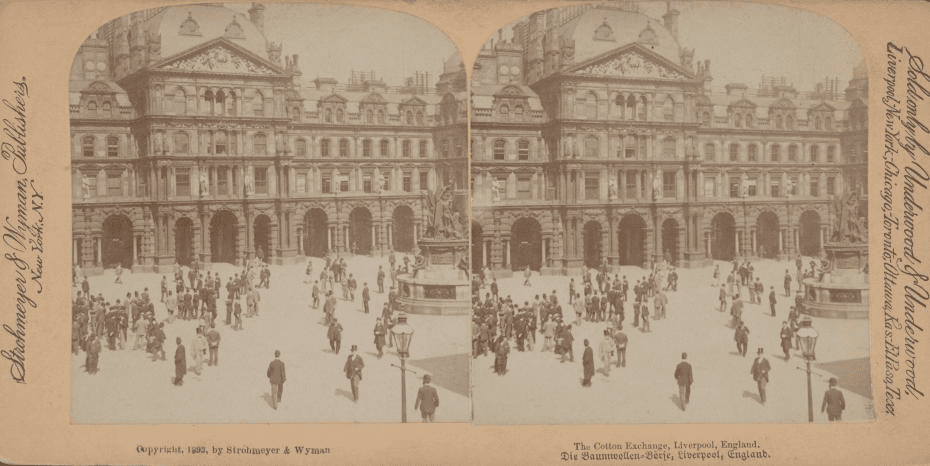
During his Manchester practice, one of Alfred Waterhouse’s key projects was the Assize Courts and Strangeways Prison. In 1859, a prestigious architectural competition was announced for the design of the court buildings. It is worth noting that over 100 architects participated, including such masters as Edward Barry, Cuthbert Brodrick, and Richard Norman Shaw. But it was Waterhouse who won. This event became a real breakthrough for him in the field of public architecture.
The court complex was built between 1859 and 1865 and became an important milestone in the architect’s career. The building, designed in the Gothic style under the influence of John Ruskin’s views on Venetian architecture, was distinguished by its complex layout and high decorative richness. The construction cost £120,000 – a considerable sum for the time. This was the first large-scale embodiment of the High Victorian Gothic style in Waterhouse’s work. Thanks to this project, he secured his reputation not just as an architect, but as one of the leaders in Britain’s architectural sphere.
Without a doubt, Waterhouse’s most famous work is Manchester Town Hall, completed in 1877. This building was a true breakthrough. In those years, Manchester was rapidly developing as an industrial centre and needed a symbol of its strength and ambition, and Waterhouse managed to embody this idea in his architecture.
The Town Hall is a veritable Neo-Gothic cathedral, only instead of prayers, it houses city governance and the flow of urban life. Its clock tower rises 85 metres above Albert Square, and the facade features intricate stonework. But the building is not just impressive from the outside. Inside, there are spacious staircases, mosaic floors, and murals that tell the history of Manchester.
This building was not built just for politicians. It was meant to inspire ordinary people, to give them a sense that they were part of a great and important city. From the moment it opened, the Town Hall symbolised the pride of Manchester.
Outside of Manchester, namely in London, Waterhouse created another landmark: the Natural History Museum, completed in 1881. Waterhouse took the Gothic style and adapted it magnificently. He used terracotta bricks to protect against the city’s pollution and decorated the interiors with sculptures of animals, fossils, and plants, turning the building itself into a living encyclopaedia of the natural world.
Waterhouse was also responsible for dozens of buildings across Great Britain, including colleges, schools, libraries, hospitals, and banks – many of which survive to this day.
Alfred Waterhouse became, perhaps, the most financially successful architect of the Victorian era. He designed some of the most expensive buildings of that time.
He was valued for his ability to design logical and functional buildings, even on difficult sites. He assembled a strong team, collaborated with reliable contractors and suppliers, ensuring his projects were not only beautiful but also durable.