
Manchester is often called “the world’s first industrial city.” But hidden among its glass skyscrapers and modern offices lies another, more romantic layer of history — the Victorian one. This was an era when the city was not just an industrial capital but also possessed a magnificent architectural appearance. Back then, red brick, stone façades, and Gothic spires became the visual reflection of that epoch in Great Britain. In the 21st century, such architectural sites serve as true gateways to the city’s past. In this article, we will delve into the history of the Victorian grandeur of Manchester’s 19th-century architecture. Read more on manchester-future.
The History of Victorian Architecture
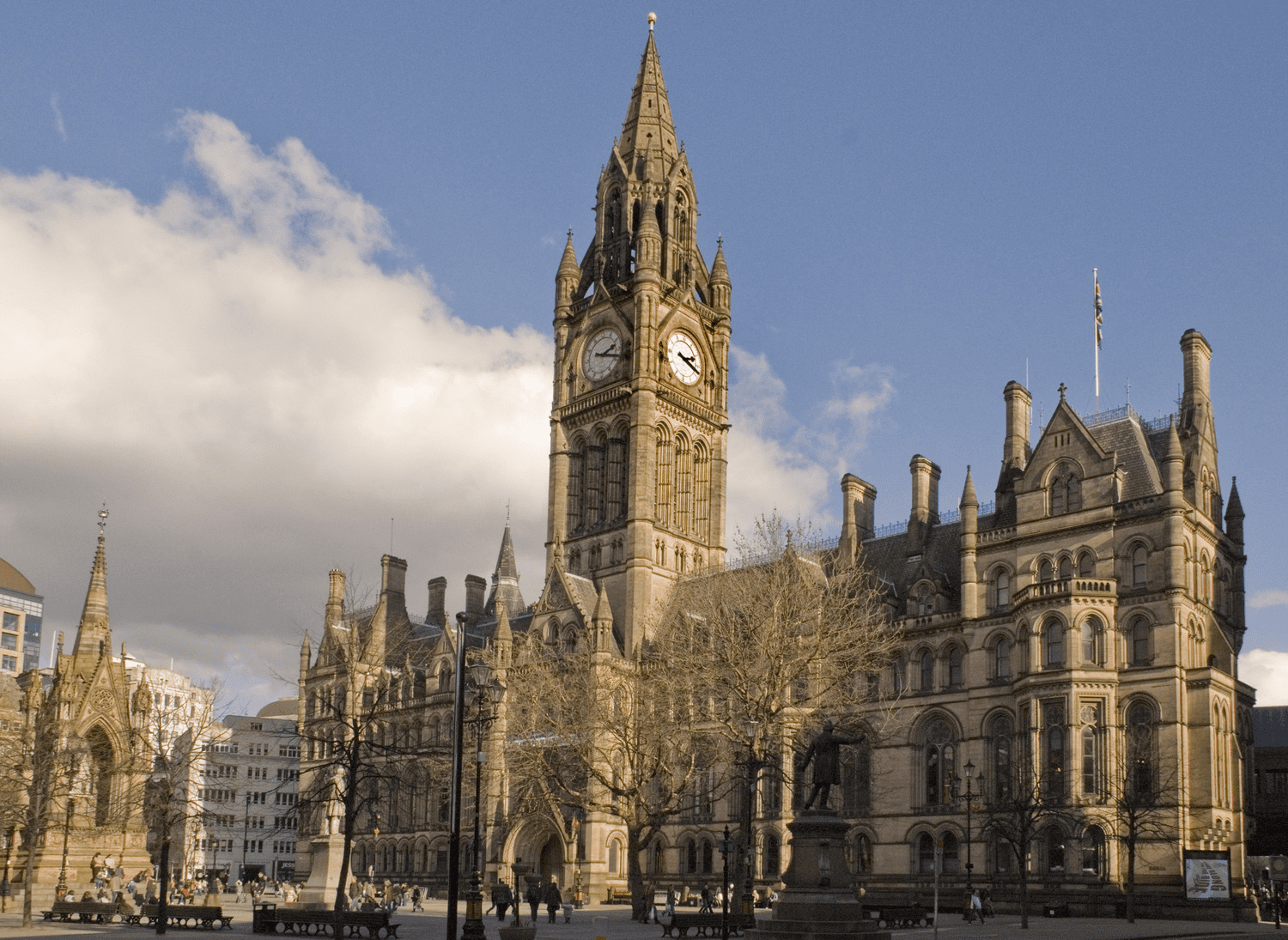
Victorian architecture refers to the architectural styles that emerged during the reign of Queen Victoria, from 1837 to 1901, in the United Kingdom and its colonies. It is not a single style but rather a long period of coexistence and development of numerous architectural movements, reflecting the technological progress, social changes, and cultural preferences of the 19th century.
It is worth noting that the Victorian era coincided with the Industrial Revolution, which transformed cities like Manchester, Birmingham, and London into thriving industrial centres. The development of manufacturing, mass production of materials such as brick, iron, and glass, and the rapid expansion of railways allowed for the creation of architectural structures faster, better, and on a larger scale than ever before.
The architecture of that era also reflected British imperial influence, which introduced exotic motifs and materials from around the world. The growing middle class demanded stylish homes, while public buildings were designed to express civic pride and wealth.
Key Styles of Victorian Architecture
- Gothic Revival. This style can be likened to medieval cathedrals. It was characterised by pointed arches, spires, intricate stone carvings, and stained-glass windows. It was popular for churches, schools, and public buildings, such as Manchester Town Hall and other works by Alfred Waterhouse.
- Italianate Style. Borrowed from the Italian Renaissance style, it featured low-pitched roofs, tall, narrow windows with arches, and decorative brackets under the eaves. It was popular in the construction of urban terraces and villas.
- Queen Anne Style. Known for its red brickwork, asymmetry, bay windows, and gables. It was popular for suburban houses and public buildings.
- Romanesque Revival. More massive and rounded than Gothic, with rounded arches and thick stone masonry, it was often used for factories, warehouses, and railway stations.
- The Arts and Crafts Movement. Also known as a late Victorian style, it was notable for its reaction against mass industrial production, placing an emphasis on craftsmanship, natural materials, and simple forms.
Victorian architecture brought not only grandiose architecture to Manchester and other cities in Great Britain but also a true revolution. It was during this period that the mass production of brick and terracotta, cast iron and steel, as well as plate glass, was mastered.
The Victorian style forever changed the face of cities. This was manifested in dense terraced housing for workers, magnificent public buildings, and extensive railway infrastructure with monumental stations. In industrial cities like Manchester, this style was adapted for factories, warehouses, and offices, combining decorative elements with practicality.
How the Victorian Style Permeated Manchester
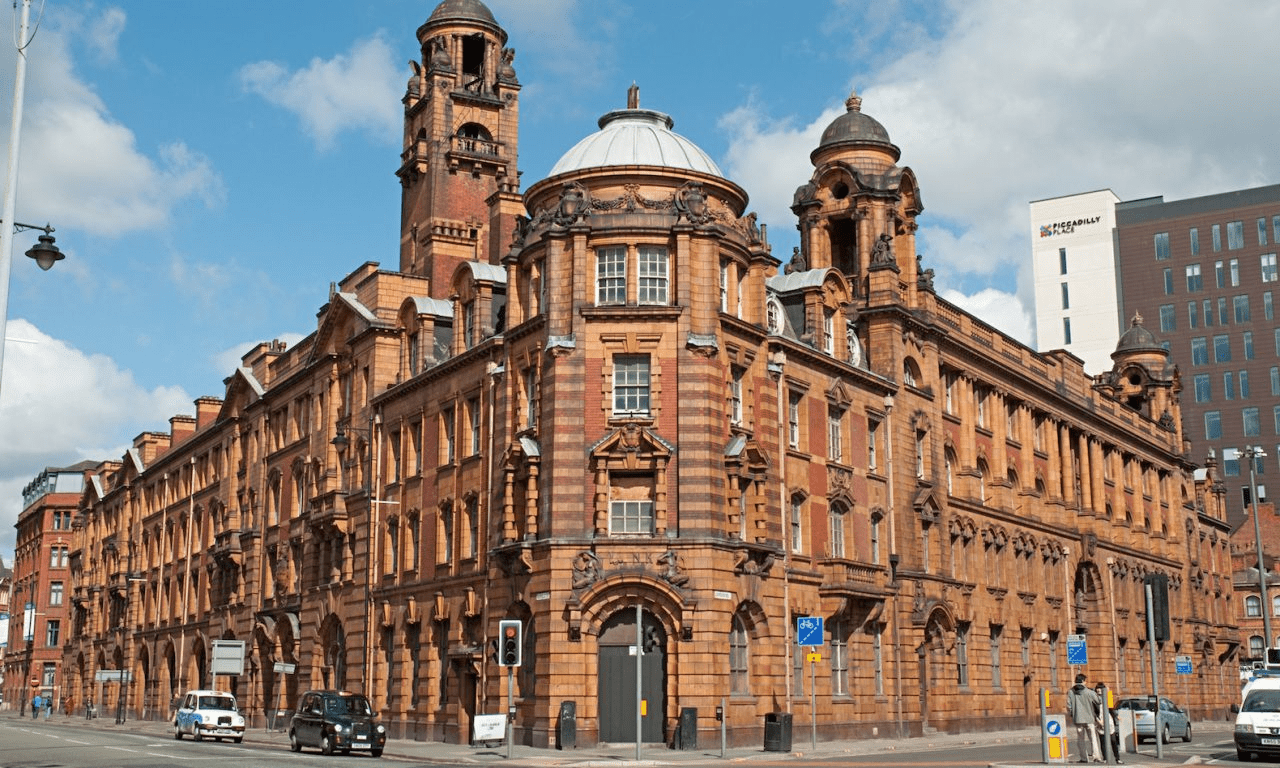
Manchester’s Victorian architecture was, in many ways, a political statement. At the time, the city authorities sought to show that Manchester was not only an industrial hub but also the cultural capital of the North of England. A striking example is Manchester Town Hall, designed by Alfred Waterhouse. Its Gothic Revival style, stained-glass windows depicting historical events, and elegant towers spoke of the city’s wealth and independence. Such buildings embodied a belief in the power of local governance and in progress — the idea that architecture should inspire.
Gothic Revival became the favoured style for public buildings of that time. Libraries, schools, and courts were all built with a grand scale and attention to detail. Stone arches, carved façades, and stained-glass windows were not mere decorations: they instilled in the citizens a sense of belonging to something great.
Features of Victorian Style in Manchester: Red Brick as the City’s DNA
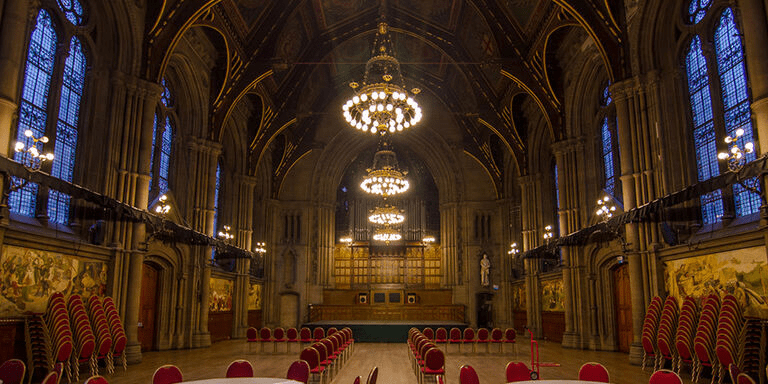
While white Portland stone was in vogue in London, Manchester was different — it was all about red brick. This was both practical and symbolic. After all, excellent quality clay was extracted from the outskirts, and the mass production of bricks made it possible to build quickly and relatively inexpensively. But the masters of that time did not limit themselves to a utilitarian function: façades were adorned with terracotta details, stucco, and decorative gables.
Among the industrial buildings that have survived to this day, the former textile mills in the Ancoats district stand out. These monumental complexes, with their long rows of windows and austere geometry, are still impressive in their scale. In the 2020s, many of them have been converted into residential lofts and offices. Buildings that have stood the test of time can only attest to the quality of materials and workmanship of that era.
It is worth noting that in addition to industry, the 19th century was a time of flourishing trade in Manchester, and the architecture perfectly reflected this. Shops and arcades were transformed into veritable “palaces.” Buildings like the Corn Exchange impressed with their rich decor, mosaic floors, and stained-glass windows.
A special place was occupied by the “palaces of labour.” These were the so-called buildings of trade unions and cooperatives. They were built with the same care as banks and demonstrated the strength of the working-class movement of that era. For the workers of Manchester, these buildings were symbols of hope: here, their affairs were settled, their rights were defended, and the architectural grandeur underscored the importance of their mission.
Victorian Buildings in the 21st Century
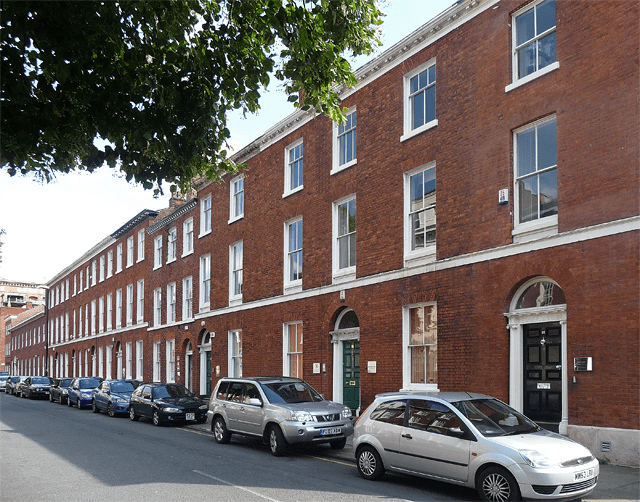
In the 21st century, Manchester’s Victorian buildings are living a second life. Many of them have been adapted for modern functions: factories have become residential buildings, banks have become bars, and town halls and libraries have become cultural centres. But in the process of restoration, a key question always arises — how to preserve authenticity?
Successful renovation projects strive to retain original materials and decorative elements while integrating modern conveniences. This requires expense and skill, but the result justifies the effort: the city preserves the character that has been forming for centuries. At the same time, a public movement for the protection of architectural heritage is growing. Victorian façades are not just beautiful decorations; they are part of the city’s identity, without which Manchester would lose its unique character.
It should also be noted that by the end of the 19th century, Victorian architecture was criticised by modernists for its eclecticism and excessive ornamentation. However, in the 21st century, it is valued for its craftsmanship, richness of detail, and variety of styles. Many cities carefully preserve their Victorian buildings as part of their cultural heritage — from terraced streets to elaborately decorated city landmarks. Manchester is, of course, among them, where examples of Victorian architecture have become an integral part of the urban landscape. They not only serve as a reminder of the city’s industrial past but also attract tourists, architects, and researchers from all over the world. In the 2020s, these structures blend harmoniously with modern buildings, creating Manchester’s unique architectural character.

