

The history of Manchester’s Victoria Station is a true reflection of the city’s own evolution. In the 19th century, the station was a technical breakthrough; in the 20th, it became a site of notorious accidents and trials; and in the 21st, it stands as a symbol of the modernisation and renewal of urban infrastructure. It is not merely a transport hub — it is a living organism that is constantly being rebuilt to meet the demands of time, technology, and the millions of passengers who pass through its halls every year. Read more on manchester-future.
Why was the design of Victoria Station considered a breakthrough?
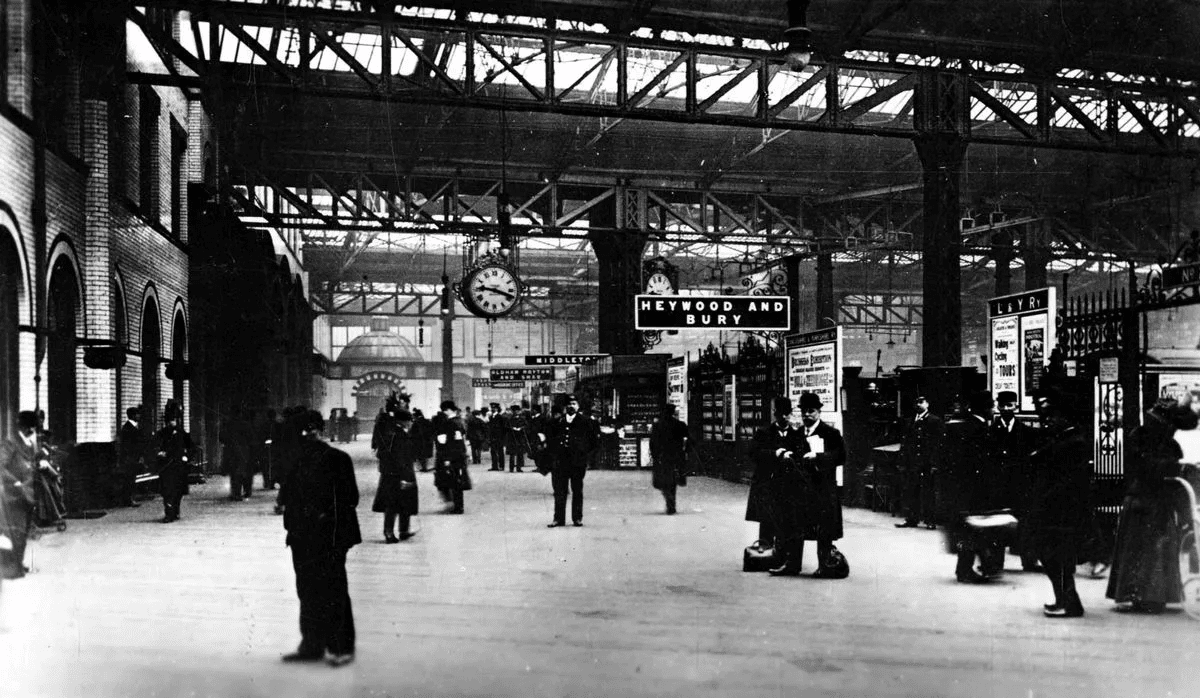
When Victoria Station opened in 1844, England was already on the threshold of a railway revolution. However, it was this Manchester station that became the place where engineers first demonstrated what the transport architecture of the future could look like.
At the time of its opening, the station boasted one of the most impressive glass roofs in Europe — a gigantic structure of metal and glass that allowed daylight to flood the platforms. For the 19th century, this was not just aesthetically pleasing — it was absolutely revolutionary. After all, most railway stations of that era resembled dark hangars with minimal lighting. Manchester’s Victoria Station, by contrast, looked like a modern gallery.
Engineers employed an innovative method for assembling metal trusses, which allowed for the creation of vast spans without the need for additional supporting columns. This method was used for factories and exhibition pavilions, but not for railway stations. It was this bold engineering thought that defined the station’s future.
Unlike most stations of that era, Victoria Station was organised as a hub station, allowing passengers to easily transfer between lines. It was considered one of the first “intelligent” stations, where train movements were planned not chaotically, but according to a logical system of flows and interchanges.
Manchester has always been the industrial heart of the country, and the railway became its main artery. Victoria Station was not just convenient — it was essential for a city that was growing at an explosive rate.
But beyond technical innovation, the station impressed with its appearance: red brick, classic facades, stone carvings, and a clock that became a city landmark — all of this formed the image of the “Manchester Victorian Style,” which modern architects still adhere to today.
Fires, Collapses, and Years of Trials
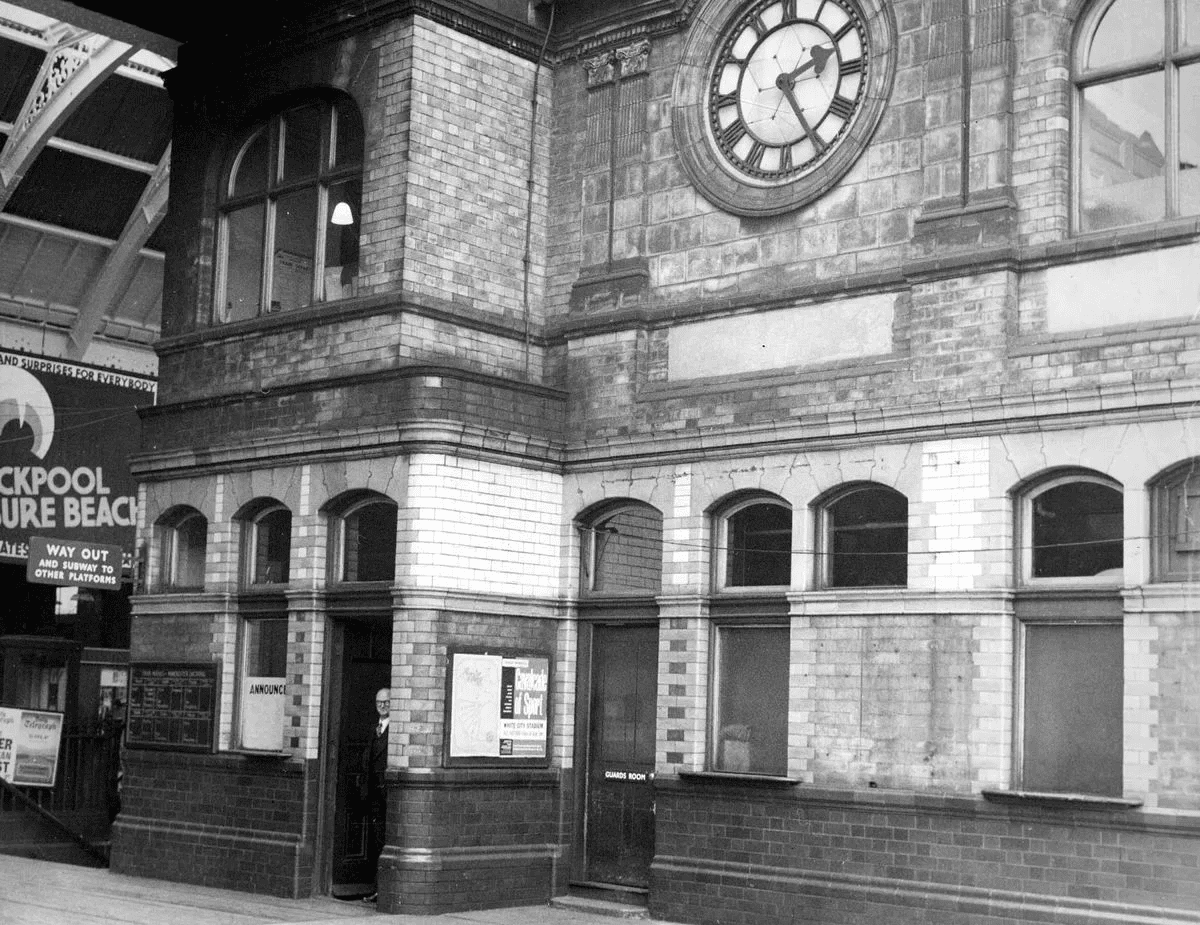
Despite its status as an engineering masterpiece, the station repeatedly suffered strokes of bad luck. In the 20th century, it went through a series of catastrophes that not only damaged the infrastructure but also cast doubt on its future.
The most massive fire occurred in the 1940s during the Manchester Blitz. The flames engulfed one of the platforms and part of the roof, causing serious destruction. Following this, the roof had to be partially dismantled, and many wooden structures were replaced with metal ones.
Fires recurred later on — due to aging electrical wiring, worn-out cables, and the general complexity of maintaining a building of such scale. Every outbreak served as a reminder that the engineering innovations of the 19th century had their limits.
Among the most serious incidents was the partial roof collapse in the 1980s, which forced authorities to temporarily close part of the platforms. Engineers concluded that the structure, which was over 130 years old, could not withstand the load and changing weather conditions.
Particular attention must be paid to the terrorist attack of 1996, when an IRA bomb damaged the building and nearby infrastructure. The station suffered partial damage from the shockwave and required extensive repairs.
Aside from major incidents, Victoria Station struggled for decades with issues familiar to every passenger:
- a leaking roof;
- wind whistling through the gaps;
- a low level of comfort;
- outdated security systems.
By the early 2010s, passengers were calling it the “worst station in the North of England”. And it was precisely this that compelled the authorities to begin a massive modernisation.
The Long Road of Reconstruction: How the Station Survived the 20th Century
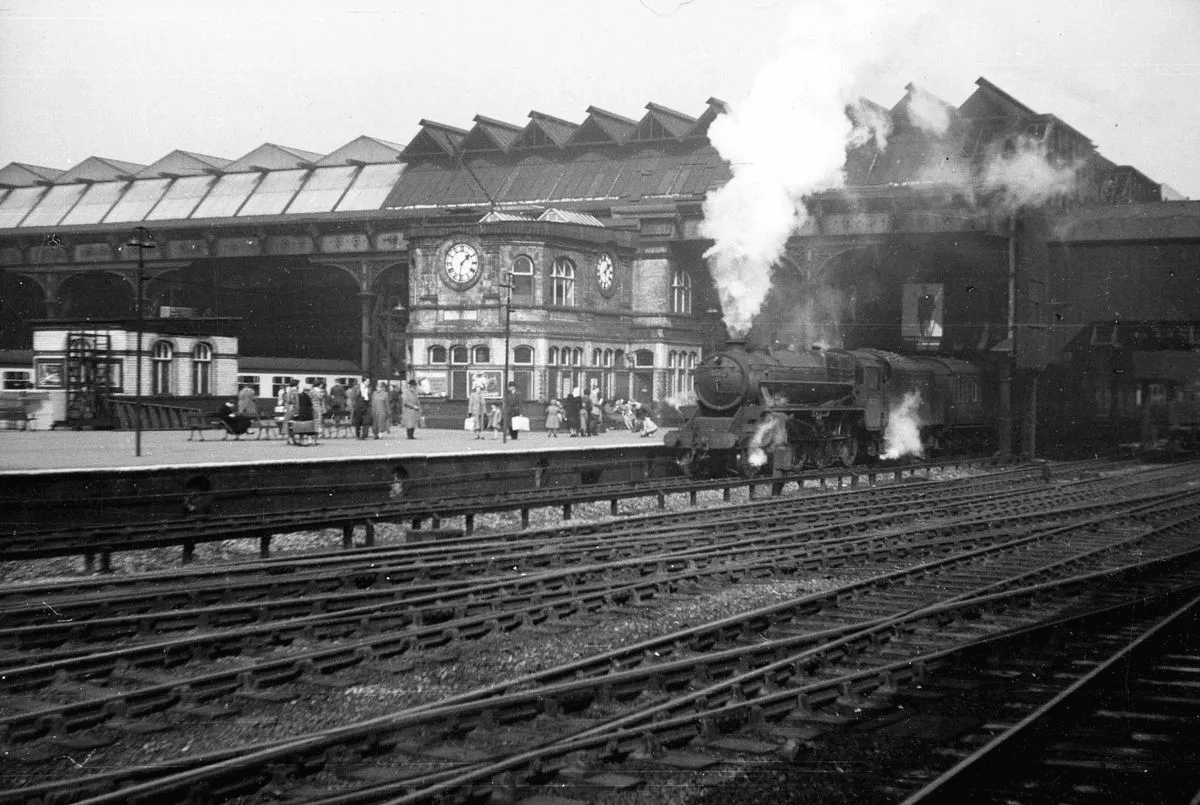
Throughout the decades, Victoria Station was rebuilt gradually — sometimes slowly, sometimes out of necessity. Every generation of the city left its mark on its construction.
After the wartime destruction, the station was restored partially, depending on the budget. Several roof spans were replaced, lighting was modernised, and new walkways between platforms were installed. However, the architecture remained a mixture of the old and the new — a sort of museum of urban chaos.
In the 1960s and 1970s, British railways were transitioning to electrification, and Victoria Station became one of the key points in this process. This required rebuilding the overhead line networks, platforms, and partially updating the track infrastructure.
Many passengers do not even suspect that beneath their feet, they are walking over old tunnels and communications that have existed since the Victorian era.
After the 1996 attack, a chance appeared to radically renew part of the infrastructure. The station received new facade elements, improved lighting, and adapted crossings for people with disabilities.
But this was not enough. The station was aging faster than it was being repaired.
Contemporary Modernisation
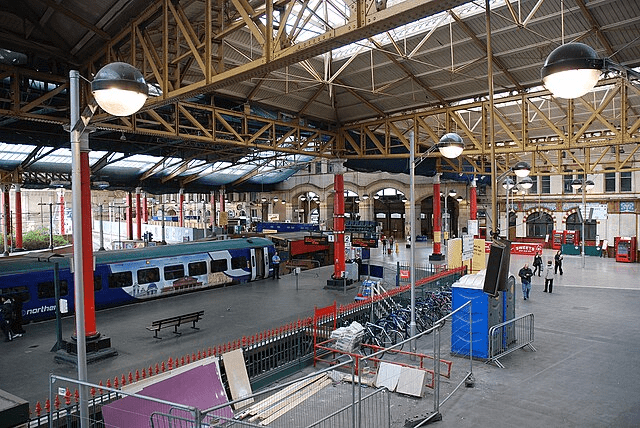
The situation changed drastically in 2015, when Victoria Station underwent a complete reconstruction costing over £40 million. This became the largest update since its construction.
The old glass dome was replaced with a stunningly undulating structure made of ETFE membrane — the very same material used to build the Allianz Arena and the Water Cube in Beijing. This structure is lighter, durable, energy-efficient, and lets in maximum light.
Thanks to this, Victoria Station has once again become one of the brightest stations in Britain.
The platforms were widened, raised, and modernised. New information boards, canopies, security systems, and modern LED lighting were added. The navigation and passenger flow logic were also completely updated — the station now operates as a modern transit hub, not a museum of railway history.
It is worth noting that during the reconstruction, innovations were applied such as new drainage systems to combat flooding, anti-corrosion solutions to preserve historical elements, noise insulation panels, and modern ventilation systems.
Particularly challenging was the integration of the new roof with the old stone facades — engineers worked with jeweller-like precision to preserve the authentic Victorian elements.
After the reconstruction, Victoria Station did not just become more comfortable — it became a city symbol once more. Exhibitions, concerts, and installations are held here. For Manchester, it is not simply a transport hub, but a point for meetings, travel, and vibrant city life.
Victoria Station is the living history of British engineering. It has travelled the path from a revolutionary project with the largest glass roof in the country — to a troubled, worn-out structure that survived fires, accidents, and collapses. But today, the station stands at the centre of attention once again, fully renewed, energy-efficient, and adapted to the needs of a modern city.
What began as a symbol of the industrial age has transformed into an example of how old infrastructure objects can receive a second life — without losing their historical identity. Manchester has once again proven that it knows how to harmoniously blend the past, the present, and the future in a single structure.