

Manchester is rightly considered one of the most innovative cities in the UK regarding architectural policy. The city has become famous far beyond the country’s borders thanks to large-scale gentrification and the repurposing of former industrial sites. Old factories, warehouses, and mills are being transformed into modern spaces – stylish flats, studios, shops, creative hubs, and cultural centres. Yet, Manchester is not losing its identity: it carefully preserves its unique architectural and industrial heritage. What’s more, the city is also actively building new, modern structures, such as the iconic “Beetham Tower”. Manchester is a city where the past and future coexist in harmony, setting an inspiring example for the entire world. More at manchester-future.
What you need to know about the “Beetham Tower”
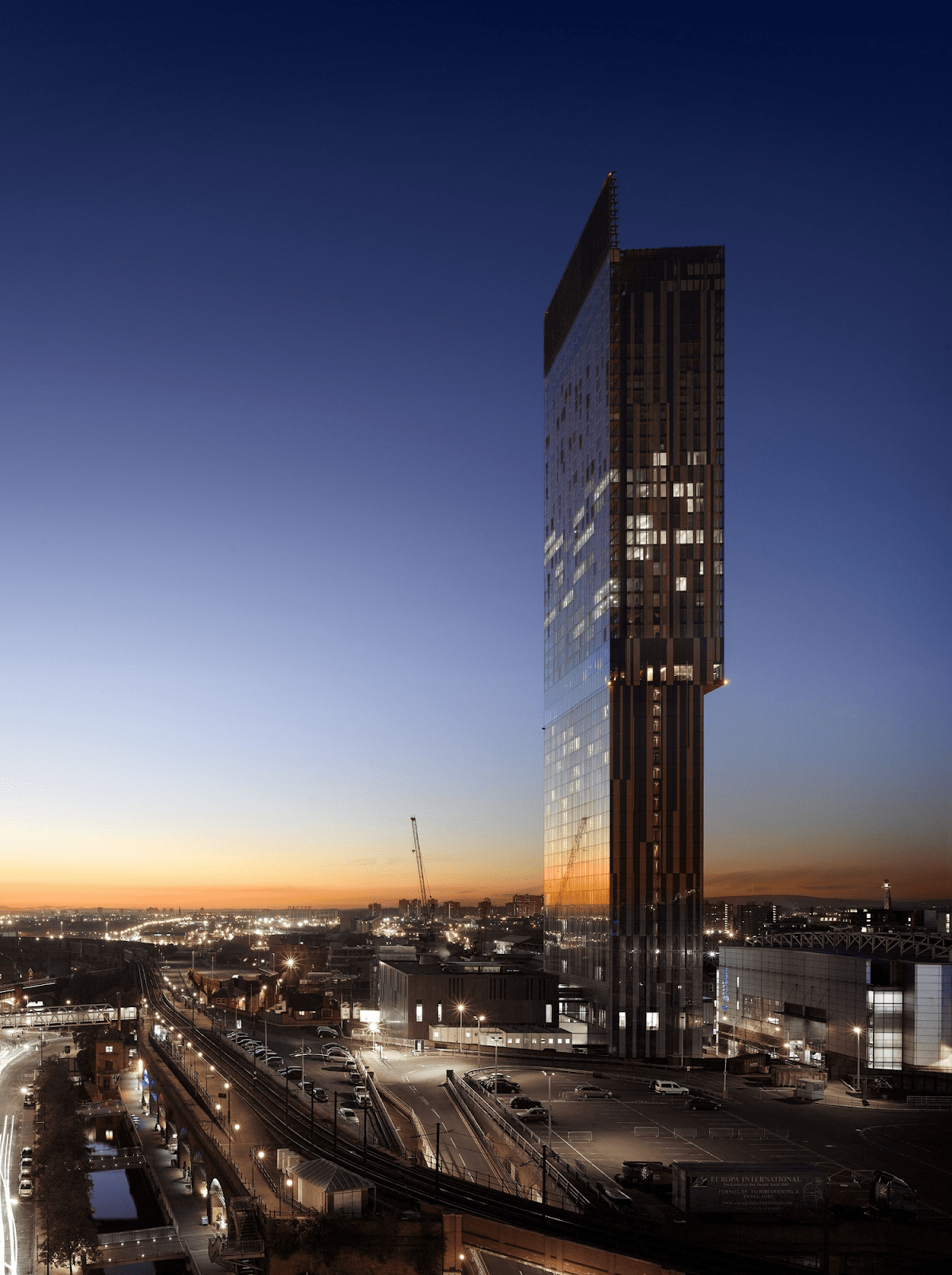
The “Beetham Tower” is a 47-storey skyscraper in Manchester, completed in 2006. The project was designed by the architectural practice “SimpsonHaugh and Partners” and was named after the developer, the Beetham Organisation. The tower is located at the upper end of Deansgate.
Standing at 169 metres tall, upon its completion the “Beetham Tower” became the tallest building in the UK outside London and held this status until 2018, when it was surpassed by the “South Tower” at Deansgate Square. The “Financial Times” described it as “the first proper skyscraper outside the capital,” emphasising its significance for Manchester’s new urban identity.
The Construction Process
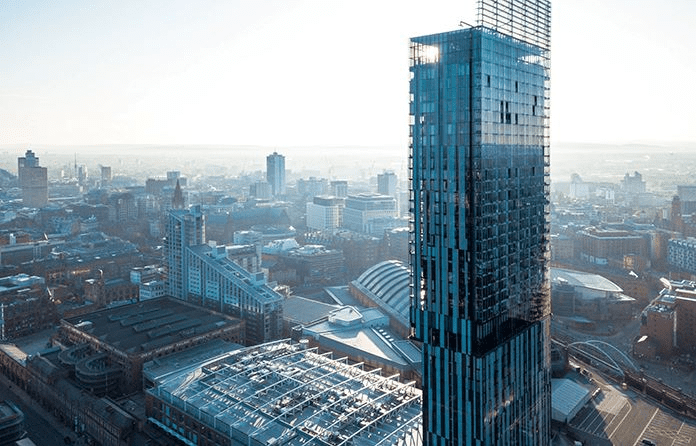
For Manchester, the “Beetham Tower” is not just a building, but a symbol of the city’s architectural renewal in the early 2000s. The project emerged on a historic site – an ancient crossroads of Roman roads and a derelict railway viaduct. Thanks to support from “English Heritage” and the city’s planning department, the project received approval in 2003, and by the end of that year, most of the flats had been sold before construction even began.
Work began in spring 2004. The building rose rapidly, and by summer 2005, it had already become the tallest outside London. Construction of the “Beetham Tower” was officially completed in spring 2006. The Manchester skyscraper cost £150 million.
In 2010, management of the tower passed to “Braemar Estates” (“Rendall & Rittner”). Despite a slight reduction in height due to wind conditions, the “Beetham Tower” became an architectural landmark for the city.
An Architectural Marvel for Manchester
When the “Beetham Tower” first appeared on the Manchester skyline, it was unlike anything else in the city. It wasn’t just the tallest building in Manchester; it was a symbol of its modernity.
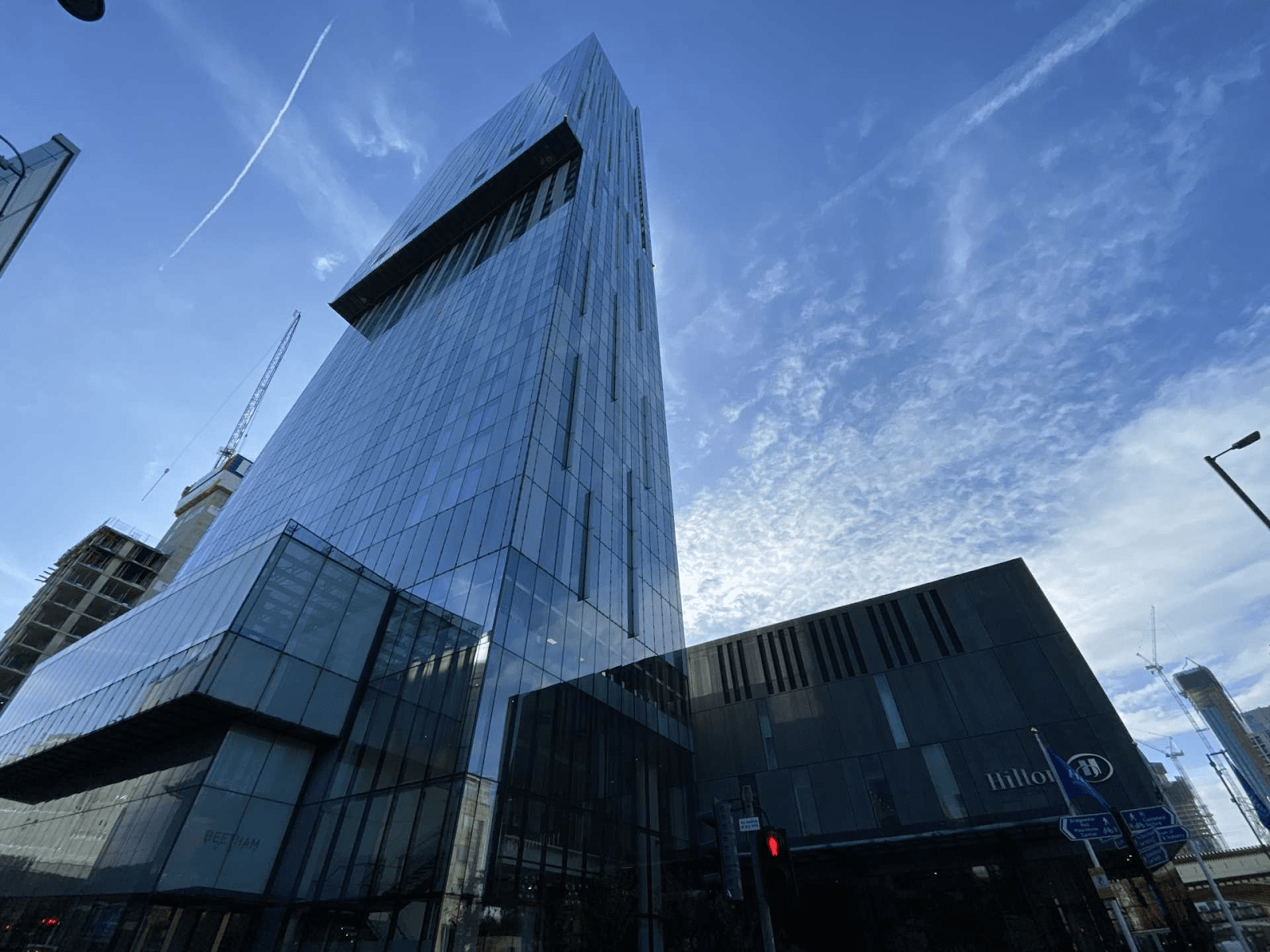
It is worth noting that the “Beetham Tower” was built on a narrow site in the very heart of Manchester, at the junction of Deansgate, Great Bridgewater Street, and Liverpool Road. Its slender form is not just an architectural choice, but a way to maximise the available space. The 23rd floor features a cantilever, projecting out by 4 metres, and at the top of the building is a striking 10-metre glass feature, dubbed the “glass blade”. It serves as both part of the unique architectural design and as a lightning rod.
The construction was undertaken by “Carillion” using post-tensioned concrete technology, and the tower became the first building in the UK to use the “Doka SKE 100” automatic climbing system and trapezoidal glass. Due to the ground conditions, a 2.5-metre thick raft foundation was used instead of piles, set at a depth of 9 metres. In total, the project used 57,000 tonnes of concrete and 6,000 glass panels, and over 8,000 m² of “Kingspan” insulation boards were used for thermal insulation.
The tower’s facades are clad in glass. To protect against excessive solar gain, the south face is equipped with louvres that change the facade’s configuration depending on position, while the east and west faces feature aluminium projections for additional shading. This reduces overheating caused by the conversion of ultraviolet light into infrared radiation.
The tower has 47 floors and reaches 169 metres in height. Floors 1 to 22 are occupied by the “Hilton Manchester Deansgate” hotel, which has 279 rooms. The 23rd floor hosts the “Cloud 23” bar, featuring panoramic windows with views down through the floor. Residential flats start from the 25th floor and extend to the very top. An annex building contains a swimming pool, a ballroom, a café, and conference facilities.
The “Beetham Tower” is not just a skyscraper, but a model of a technological and functional architectural ensemble for the new Manchester.
Why are high-rise buildings important for Manchester?
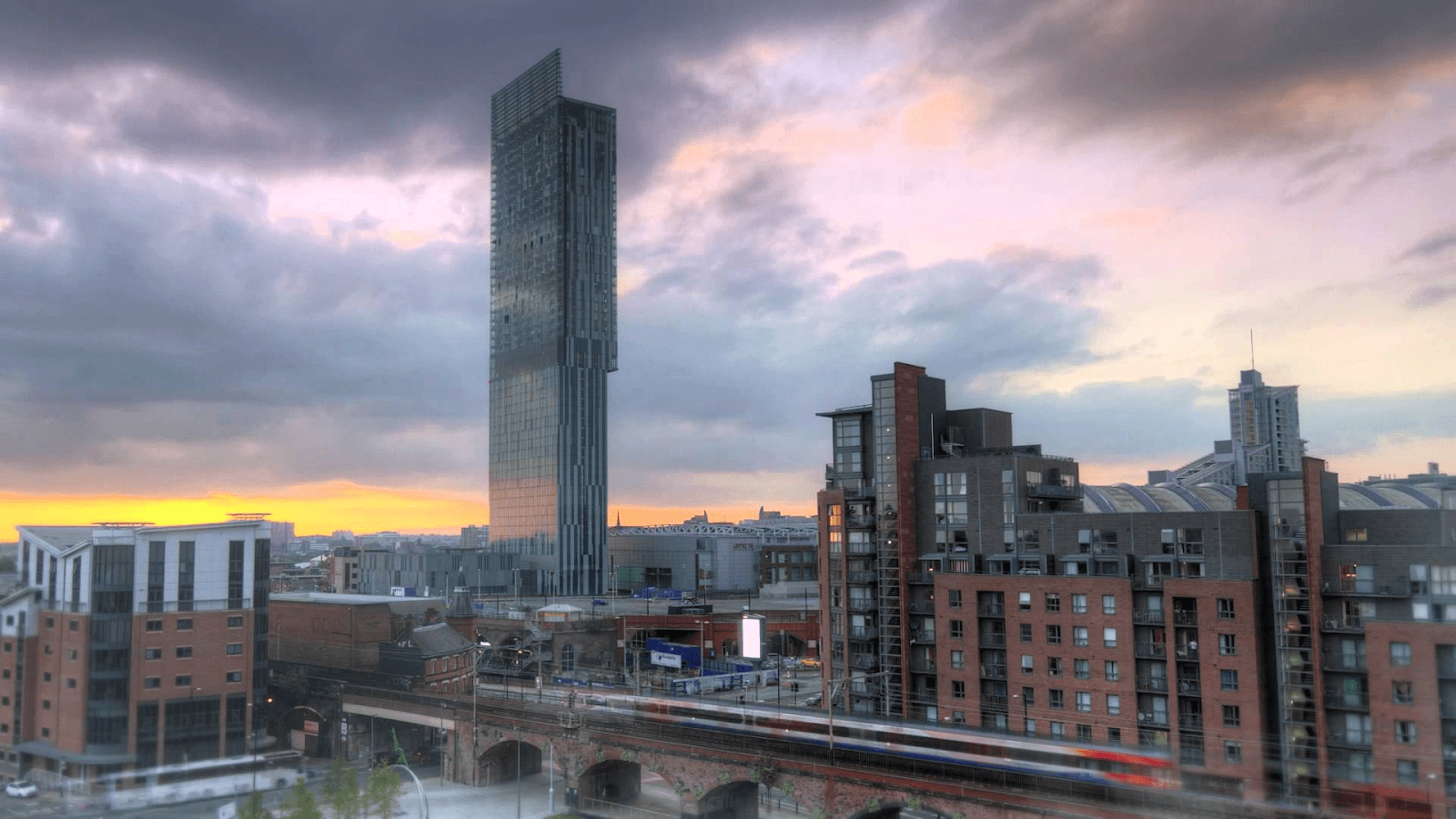
Manchester has always been changing. Where there were once cotton mills, there are now IT companies and media hubs. The city has journeyed from the first railways to digital technologies. But for a long time, its architecture seemed stuck in the past. Everything changed with the arrival of the “Beetham Tower” – it became a symbol of the new Manchester.
The “Beetham Tower” changed perceptions of Manchester. Previously, the city had grown outwards, not upwards. Then, in 2006, a completely new building appeared, bringing a fresh perspective on the architecture of the future. It demonstrated that Manchester could construct modern, bold buildings that, simultaneously, did not clash with the city’s overall architectural landscape.
It was this tower that started the skyscraper boom: “Deansgate Square”, “Elizabeth Tower”, and “Viadux” followed in its wake. All of them are inspired by the “Beetham Tower” and the reimagining of urban residential planning. The building became a true symbol of the new Manchester.
The “Beetham Tower’s” Problems
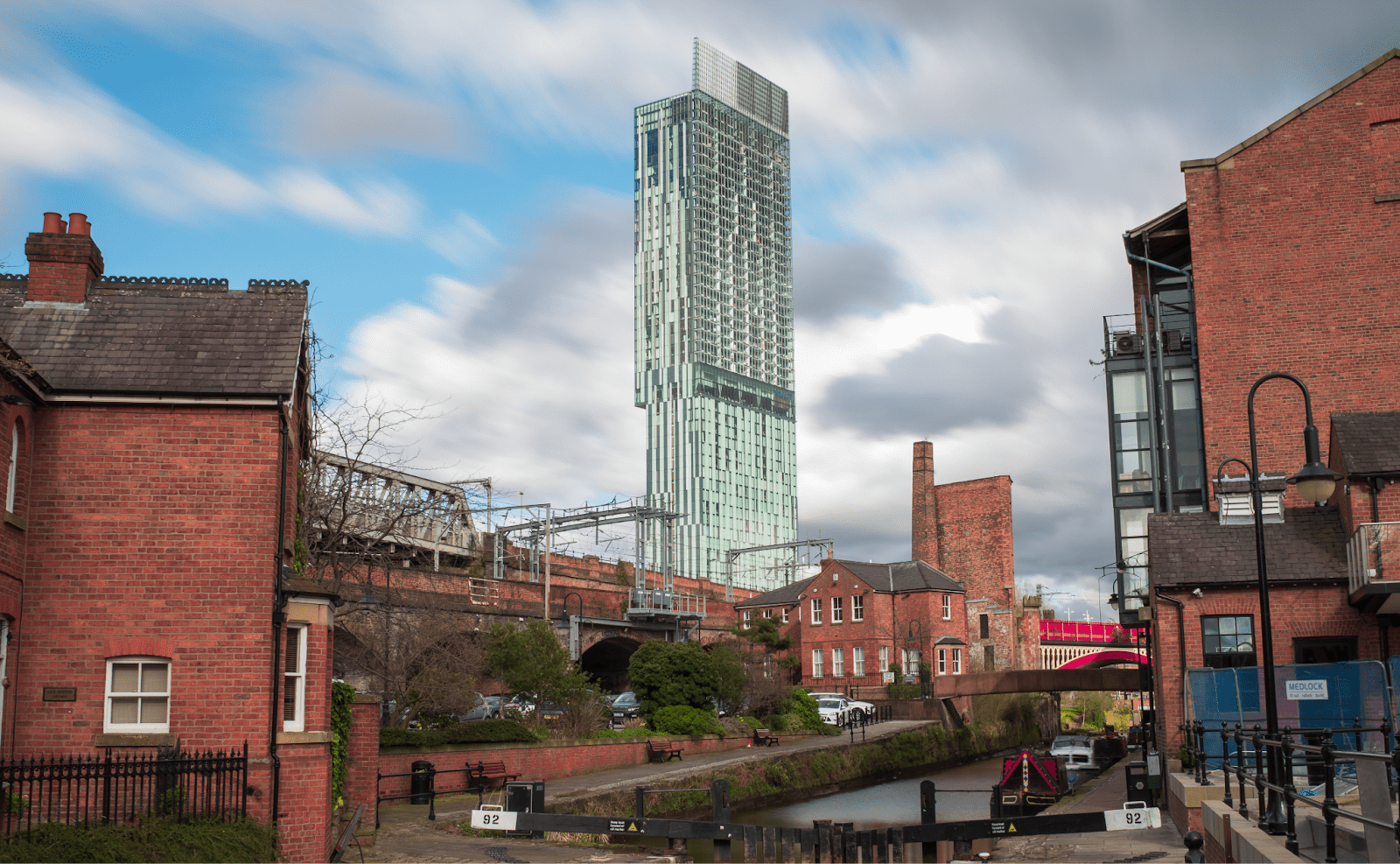
It would seem that such a new and innovative building should have been free of problems. But as it later turned out, strong winds became an issue, creating a strange humming sound from the building.
The source of the sound turned out to be the “glass blade” located on the roof. The noise was first recorded in the spring of 2006, just a few weeks after opening. Originally, the building was supposed to be taller – 50 storeys – but due to wind loading, the height was reduced to 47. It was this design feature that became the cause of the characteristic howl.
The hum can be heard from up to 300 metres away, has been compared to the sound of a “UFO landing,” and its frequency is close to the note B3 (approximately 247 Hz). This hum even disrupted the filming of the famous soap opera “Coronation Street” on one occasion.
It should be noted that several attempts have been made to rectify this problem. On one occasion, foam padding was installed; on another, aluminium strips. Other solutions were also tried, but it has not been possible to eliminate the sound completely. It can still be heard during strong storms. One potential solution is to remove the “glass blade” entirely, but for now, it remains in place.
The “Beetham Tower” became more than just an architectural object; it was a starting point for a new urban era. Before its arrival, Manchester had a “horizontal” skyline, defined by its brick buildings and industrial past. The “Beetham Tower” literally showed that the city could be modern and ambitious.
When the tower was completed in 2006, its 169-metre height caused astonishment and even controversy. For some, it became a symbol of progress; for others, a violation of the city’s familiar appearance. But over time, attitudes changed.
In the 21st century, dozens of skyscrapers can be seen on the city’s skyline, and almost every one of them owes its existence to the “Beetham Tower”, which set a new trend in urban construction. The structure gave architects, developers, and the authorities the confidence that high-rise development was the way forward. The “Deansgate Square” towers, “Elizabeth Tower”, and the “Viadux” project are all, to one degree or another, inspired by the “Beetham Tower”.
Furthermore, the appearance of such buildings has changed the lifestyle in Manchester. The city centre has become not only a business district but also a residential space. People are increasingly choosing flats in skyscrapers, offering city views and hotel-like amenities.
Thus, the “Beetham Tower” remains not just a building, but a symbol of the future of architecture in an industrial city.