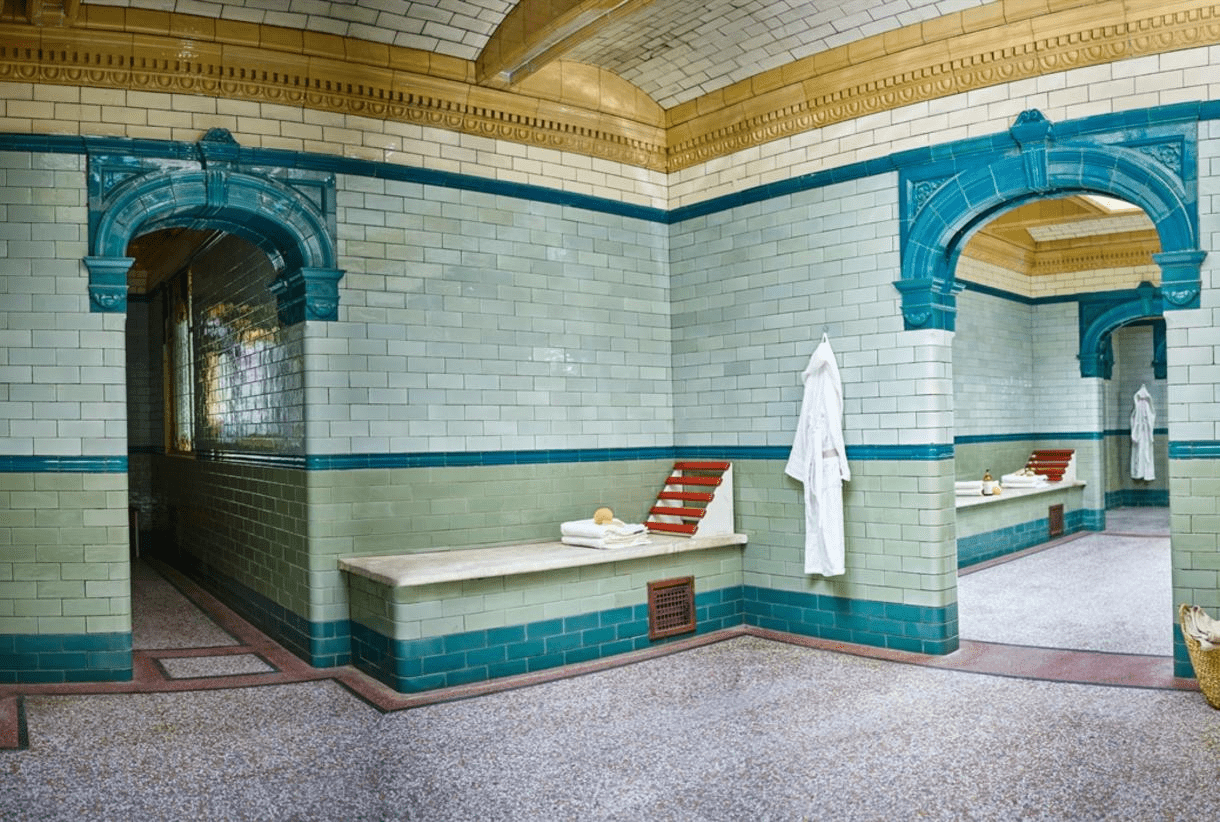

Manchester is more than just an industrial city with a rich industrial heritage; it also boasts an incredible architectural and cultural legacy. Among Manchester’s architectural gems are the Victoria Baths, a historical landmark that for decades symbolized urban prosperity. For their time, the Victoria Baths were more than just a place for bathing—they were a true architectural marvel, a social hub, and a source of pride for every Mancunian. Featuring intricate designs and luxurious amenities, the baths also played a critical role in public health at the dawn of the 20th century. Let’s delve into their rich history and heritage. Next on manchester-future.
Popularity of Public Bathhouses in Manchester
Public bathhouses have a long history, dating back to ancient civilizations where Roman baths and Turkish hammams served not only hygienic but also social and cultural purposes.
From the early 19th to the early 20th century, Manchester’s rapid industrialization led to a population boom, creating a dire need for public health facilities. Overcrowding and poor sanitation were major contributors to widespread disease. To address these challenges, Manchester’s authorities decided to establish public bathhouses, primarily to improve public health and hygiene. Their architectural grandeur was secondary to their functional purpose.
Victoria Baths: A History of Creation
Work on the public baths began in the early 20th century. The project was overseen by T. de Courcy Meade, a Manchester surveyor, and his assistant Arthur Davies, under the guidance of Henry Price, a prominent English architect and Manchester’s chief architect at the time.
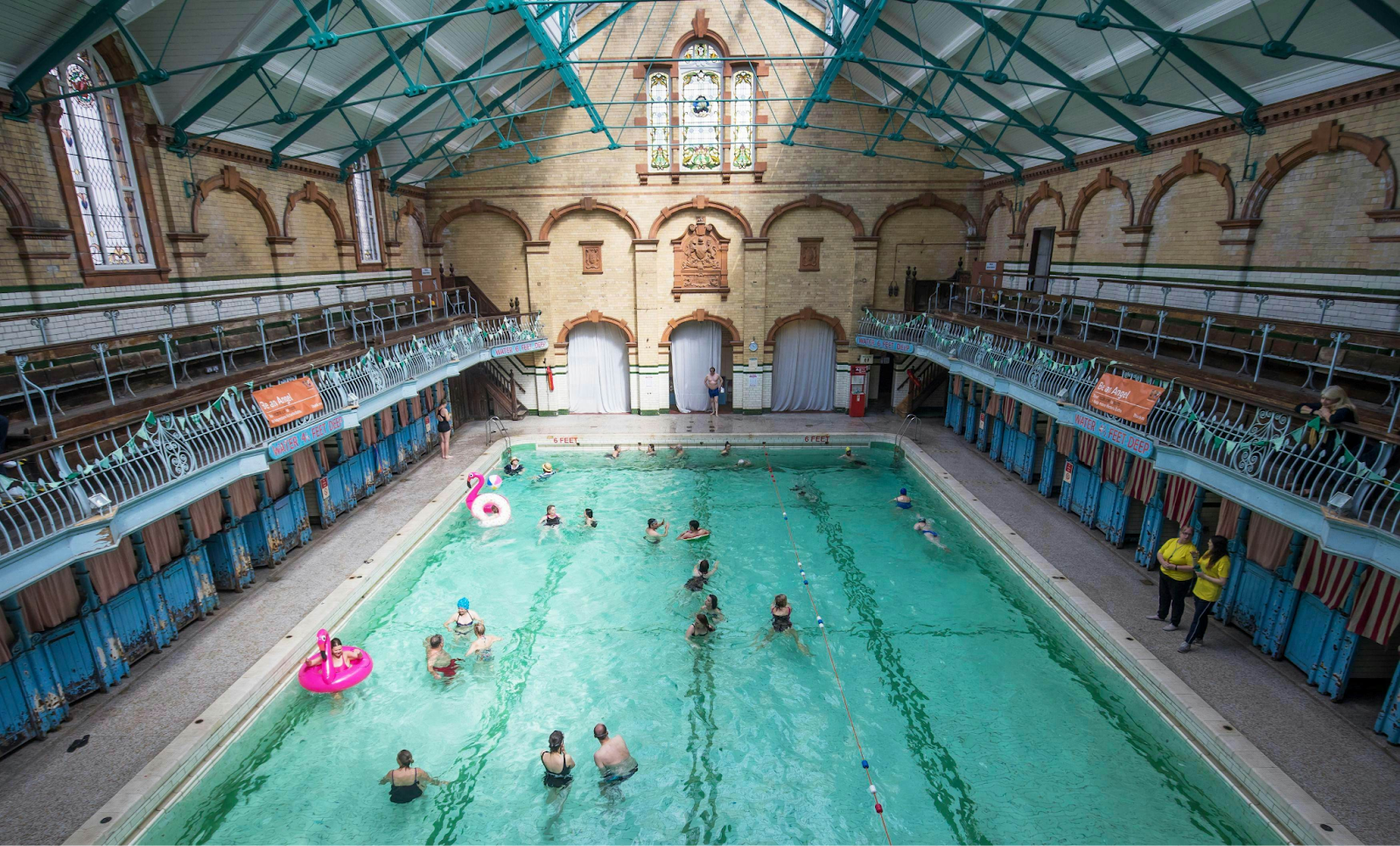
Designed in the Edwardian Baroque style, the baths were considered the finest municipal bathhouse in Manchester and arguably in the entire country. The complex housed three swimming pools, private baths, Turkish baths, and laundry facilities.
Later, a sauna was added, and during the winter, the main pool was covered with flooring for dances. In 1952, the baths introduced the nation’s first public aeration system, also known as a jacuzzi.
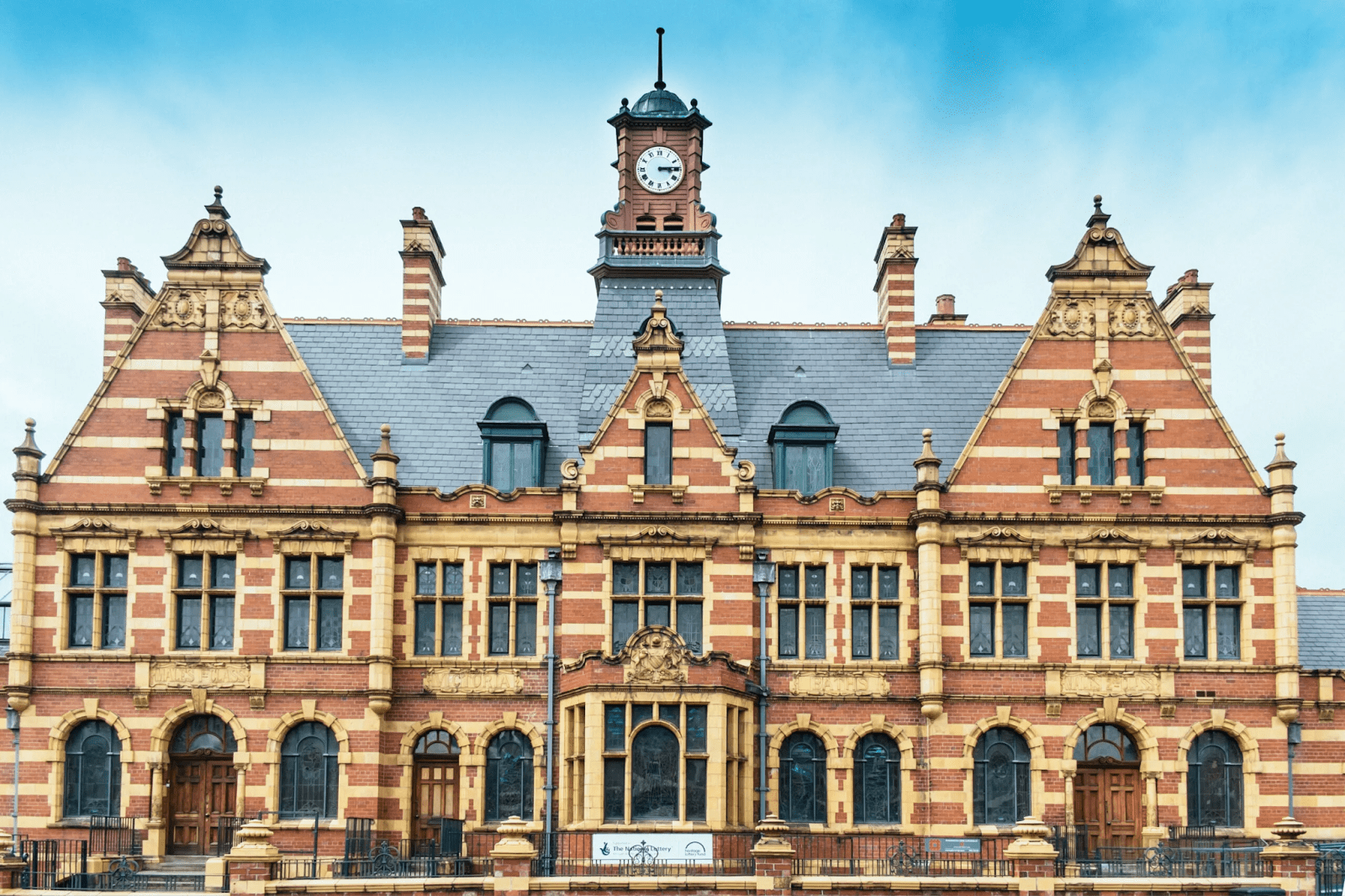
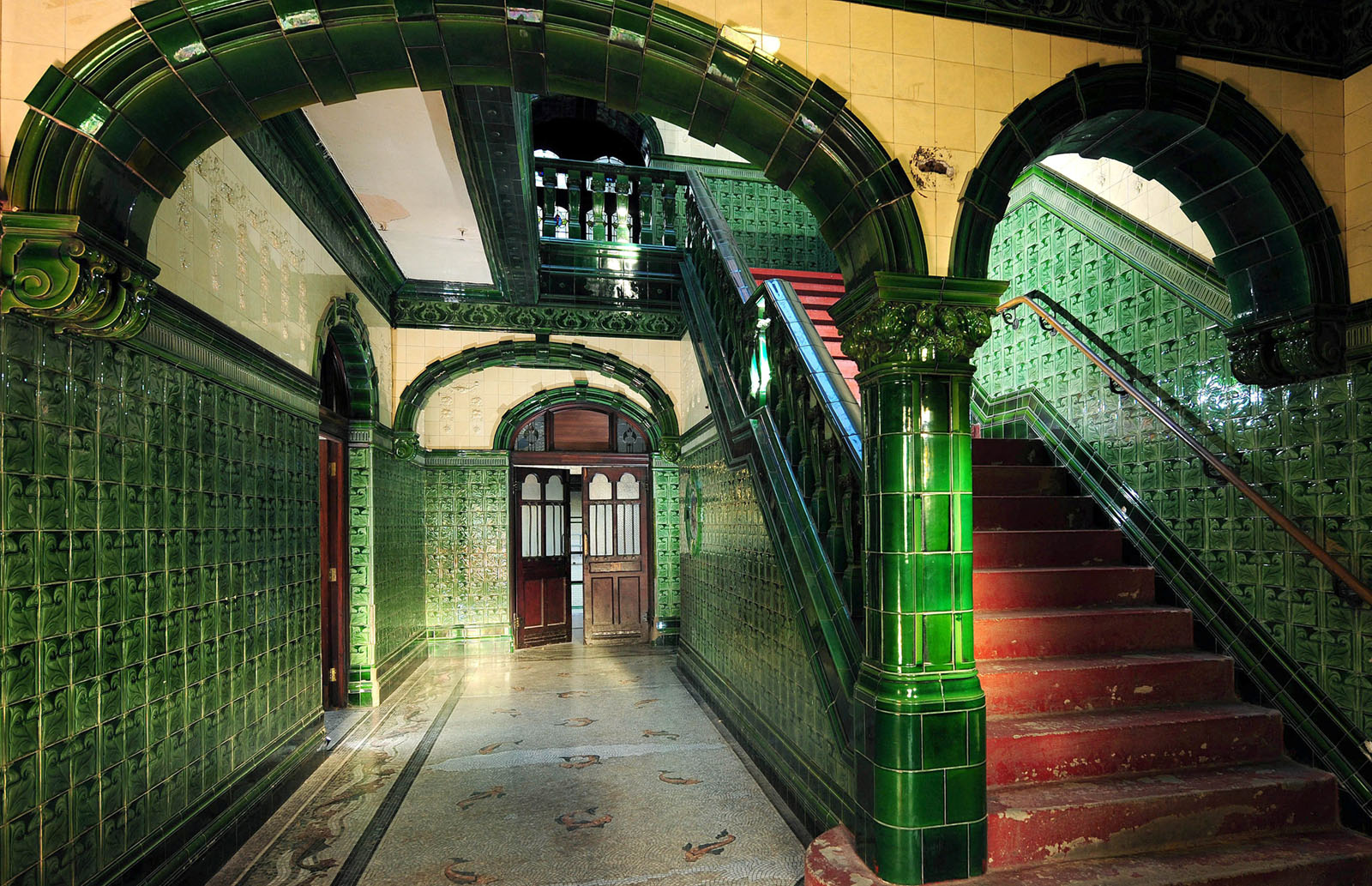
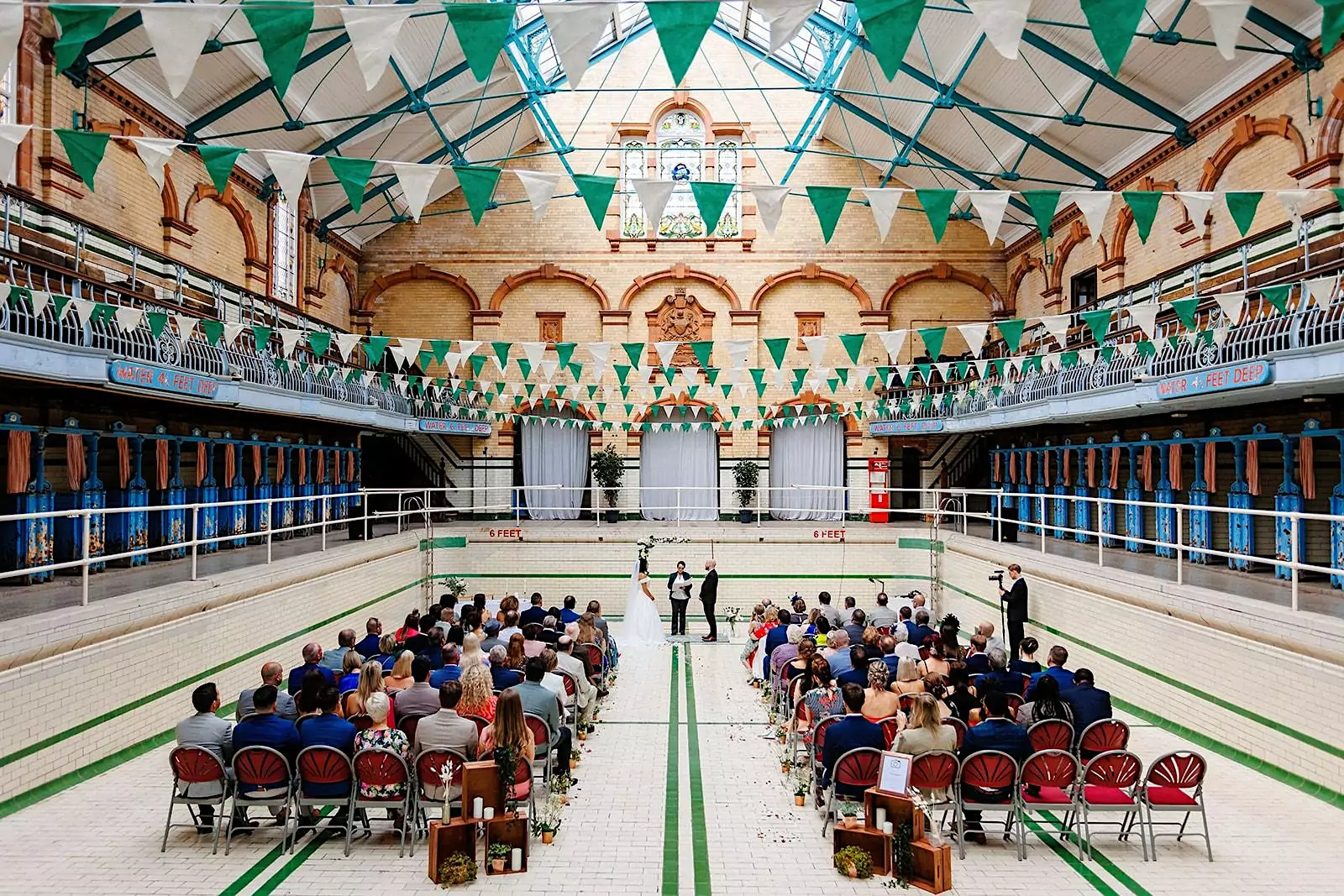
The building’s design was a hallmark of Edwardian Baroque style, featuring decorative terracotta, beautiful stained glass, and exquisite tiling. The baths were not merely utilitarian—they were built with a sense of grandeur and beauty, making every visit an experience of sheer delight.
The Cost of Construction
The Victoria Baths opened to the public in 1906, when the complex welcomed its first visitors. The construction cost the city a significant sum—£59,144, a large investment for the time.
No expense was spared in their design and construction, as Manchester boasted one of the wealthiest municipal treasuries in the world at the start of the 20th century. The façade was built with colorful brickwork and terracotta detailing, adding to the structure’s majesty. Inside, public areas were tiled from floor to ceiling, and nearly all the windows were adorned with decorative stained glass.
Closure and Restoration Attempts
Throughout the 20th century, the baths remained a central hub for Mancunians. It was a place to relax, meet friends, enjoy steam baths, and swim. However, by 1993, the Victoria Baths were closed by the Manchester City Council due to declining popularity, poor maintenance, and structural issues.
Following the closure, a group called The Friends of Victoria Baths formed to explore ways of transitioning the facility to independent management. They initiated fundraising efforts for its restoration, and by 1998, the first restoration efforts began. However, the process was lengthy and challenging.
In 2003, the baths gained national attention after featuring on the first series of the BBC program Restoration. Through public phone voting, the baths received £3.4 million in funding, securing victory among 10 endangered buildings across the UK. Initially, the funds were intended to reopen the Turkish baths by 2006, but surveyors later determined the restoration costs would be double the initial estimate.
The first phase of restoration began in 2007, focusing on waterproofing the building and repairing decorative elements. By 2008, these initial efforts were completed, marking the beginning of a slow but steady restoration process.
A Modern Revival
Victoria Baths has since been repurposed for various uses. In 2011, the baths served as a filming location, concert venue, and exhibition space. By 2017, the site reopened as a dance venue, hosting acid-house-style poolside dance events.
Despite these developments, the building remains on the Grade II-listed register of architectural landmarks, under threat of further deterioration as of 2024.
For much of the 20th century, Victoria Baths served as a social and cultural hub for locals. It was a place where people from all walks of life gathered to enjoy spacious pools, saunas, and steam baths while admiring the building’s exquisite architecture. For Mancunians, visiting the baths was a weekly ritual. Even in the 21st century, preserving this landmark is of immense importance to the community. Over the decades, the baths hosted swimming competitions, poolside dances, and numerous public events, making them an integral part of Manchester’s cultural identity.
Preservation Challenges and Future Prospects
In the 2020s, the fight to preserve the Victoria Baths continues. While full restoration is still far off, efforts to maintain the complex are supported through charitable donations and public events. The Turkish baths have been restored to their former glory, serving as a testament to the building’s original grandeur.
The bathhouse is not just an architectural gem listed as a historic monument—it’s also a vivid example of Manchester’s social history and the evolution of public health facilities. The baths played a vital role in promoting local culture and heritage.
Victoria Baths remains a cherished piece of Manchester’s history, reflecting the city’s commitment to preserving its rich past while adapting to modern needs.