

The history of free Wi-Fi in Manchester is an excellent example of how the city embraced digital transformation. In the 2020s, the Manchester City Council launched a major initiative to provide free Wi-Fi in the city center, making the Internet accessible to everyone—from residents to tourists. This innovation was part of a broader strategy to modernize public services and enhance the city’s digital infrastructure. Key landmarks and transportation hubs in Manchester were included in the list of locations with free Wi-Fi access. This decision elevated Manchester to a new level in the digital inclusion space. More on manchester-future.
How Did Free Wi-Fi Appear in Manchester?
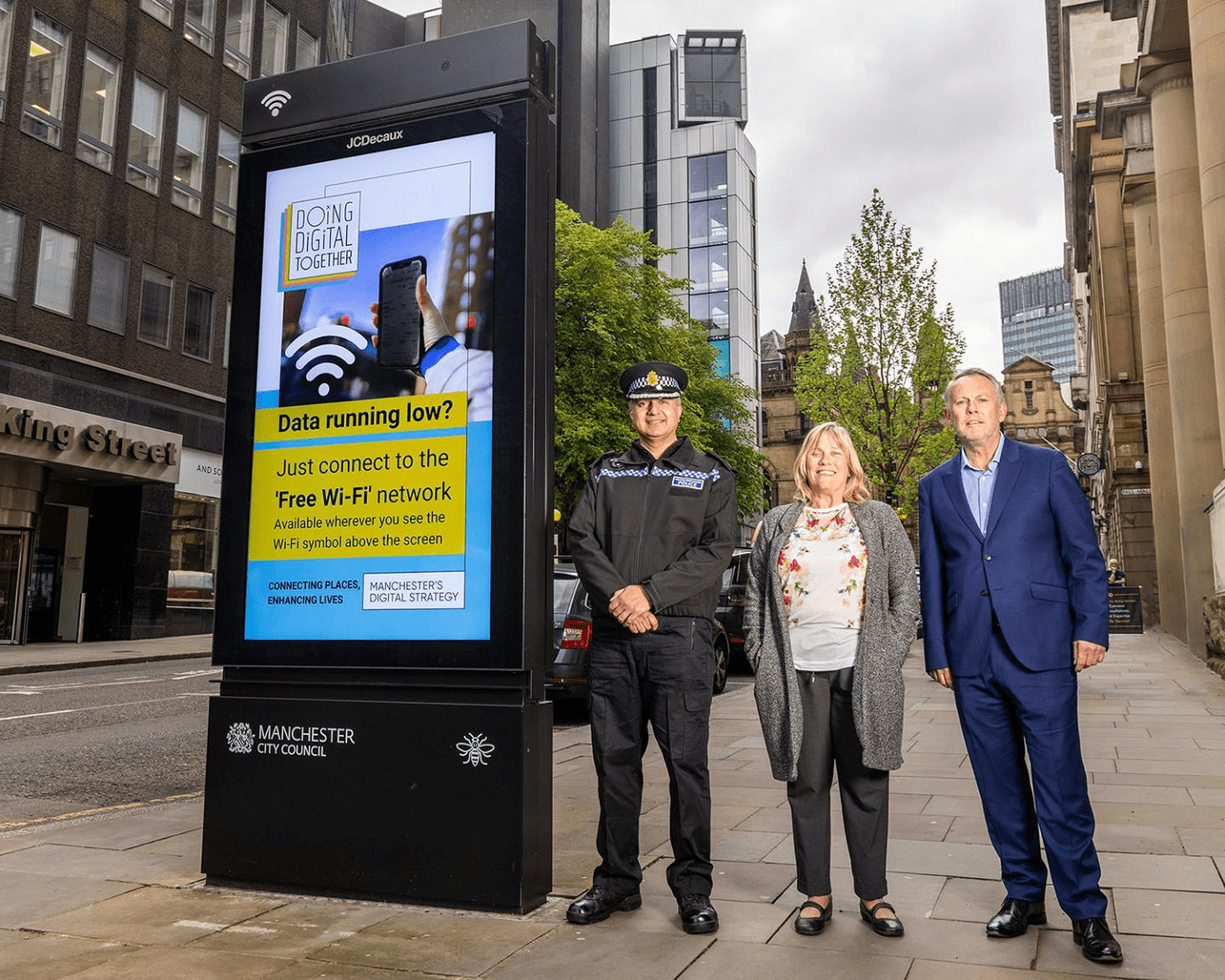
In the 2020s, as part of the city’s Digital Strategy 2021-2026, Manchester City Council created a digital access space in the city center. This initiative was made possible through a partnership with JCDecaux UK. Under this initiative, Manchester’s existing network of public information panels, known as CIP (City Information Panels), was equipped with smart city technology. This included free Wi-Fi, accessible to residents and visitors in the city center.
Manchester’s journey toward free public Wi-Fi began earlier, in the 2010s, when the city authorities recognized the growing need for digital connectivity in modern urban life. As the demand for seamless Internet access grew, particularly with the advent of smartphones and mobile technologies, the city made significant efforts to introduce free Wi-Fi to its residents and guests.
Free Internet access was not just a pressing need for the city’s residents but also a cornerstone for developing a smart city. Free public Wi-Fi provided convenience, accessibility, and inclusivity, ensuring that everyone in the city—regardless of income or background—could access online resources, whether for education, business, or staying connected with loved ones. Manchester’s leadership aimed to transform the city into a leader in digital infrastructure.
Digital Accessibility of the City
In the 2020s, a significant milestone was reached when Manchester City Council, in partnership with British advertising giant JCDecaux, launched free public Wi-Fi in central areas of the city. This was the first large-scale implementation of free Wi-Fi in Manchester.
Initially, free Internet access was provided in high-traffic areas such as St. Peter’s Square, Albert Square, and Cross Street. The service was designed to give people easy access to the Internet without the need for mobile data or private networks. Over time, seamless Wi-Fi connectivity was extended to 22 locations in key shopping and entertainment zones, including Deansgate, Piccadilly, and Piccadilly Gardens. This rapid expansion of free Wi-Fi access points was a key element of the Digital Manchester strategy.
Conditions for Using Free Wi-Fi in Manchester
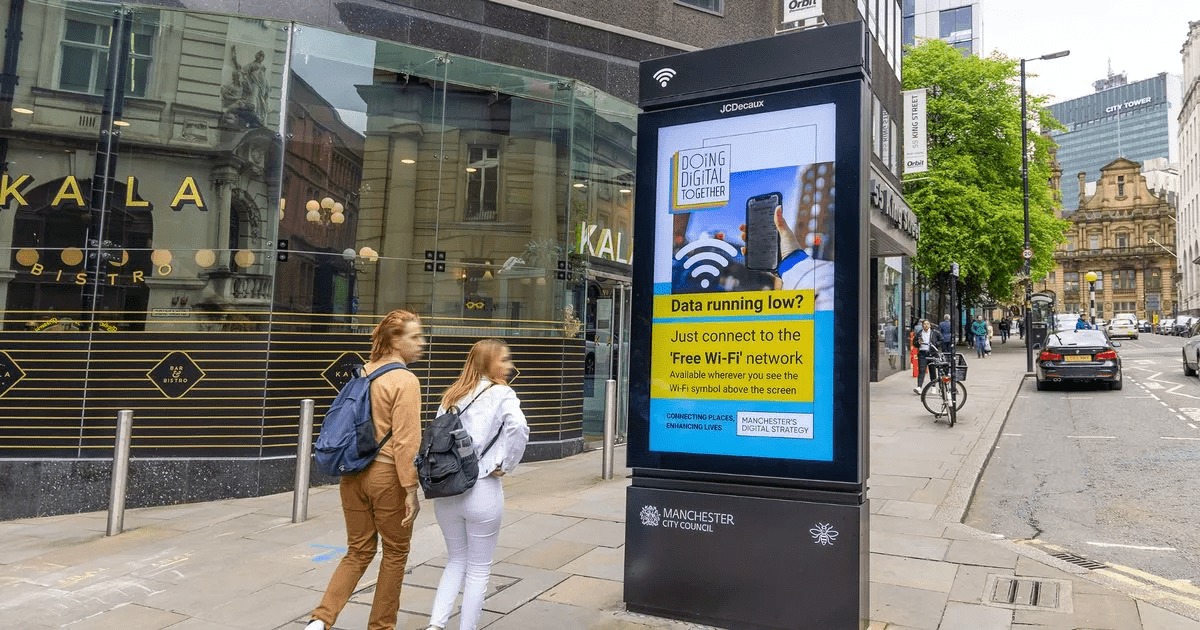
Free Wi-Fi locations are marked on CIP panels with a “Wi-Fi” symbol. To connect, users simply select the “Manchester City Council Wi-Fi” network on their smartphone, laptop, or tablet and follow the on-screen instructions. The CIP screens also feature promotional campaigns highlighting the free Wi-Fi service, making it easy for passersby to connect.
Additionally, Manchester became one of the first cities in Northwest England to adopt the InLinkUK service, which offers the fastest free public Internet in the UK. The InLinkUK package includes a range of digital services, such as local advice and community information.
The first InLinkUK access points in Manchester were installed on Portland Street, later expanding to cover High Street and Peter Street. This technology transformed Manchester into one of the most digitally advanced cities in the UK.
Broader Impact of Free Wi-Fi in Manchester
Providing free Internet in Manchester was part of a broader UK government program for digital transformation. Free Internet access was envisioned as an integral part of the city’s infrastructure. In Manchester, free Wi-Fi was seen not merely as a tool for digital transformation but as an instrument for social and economic interaction, bringing people together in new ways.
Beyond access to information and business opportunities, this step helped bridge the digital divide among different segments of the population. Thanks to free Wi-Fi, residents and tourists could stay connected, participate in city initiatives, and access online services in public spaces. This accessibility fostered the growth of small businesses, cultural projects, and increased civic engagement in city life.