

Once, Manchester was the centre of the industrial revolution in Great Britain and the entire world. Manchester was an incredibly smoky city due to the constantly running factories that produced cotton and supplied it worldwide. Red-brick factories and warehouses were the foundation of its architectural identity. But when the industrial boom subsided and factories began to close one by one, Manchester faced a new problem: what to do with all the empty industrial buildings? More at manchester-future.
In the 21st century, Manchester’s authorities are implementing revolutionary ideas. Instead of demolishing the past, the city council is giving industrial sites a second chance. Thanks to this, in the 2020s, Manchester has gained a reputation as a unique city where relics of the industrial era are transformed into stylish, modern loft apartments. These are not just old buildings with brick walls and high ceilings. They are a symbol of how Manchester has managed to reinvent itself, building on its past to create a new future.
A City Shaped by Industry
To feel the spirit of Manchester’s architecture, you need to go back to its industrial past. In the 19th century, the city was nicknamed “Cottonopolis.” It was the heart of the global textile industry. Back then, they didn’t just construct buildings; they built real fortresses. The factories and warehouses were incredibly robust and imposing, with high ceilings, thick brick walls, and massive windows. These structures were not created for beauty, but for hard and efficient work.
But in the 20th century, everything changed. The industrial boom began to gradually decline. Manchester lost its status as a factory giant, and the buildings, once filled with the noise of machinery and the smell of cotton, were left empty. They stood, abandoned and silent, like monuments to a bygone era.
And this is where the amazing transformation begins. The city authorities did not demolish these empty buildings. On the contrary, they saw potential. Architects, artists, and creative entrepreneurs breathed new life into these spaces. Old warehouses were transformed into galleries, offices, studios, and fashionable apartments.
These buildings are not just architectural structures for the city. They are a living memory of Manchester’s industrial past, which became the foundation for its cultural revival. The city council did not erase its history; on the contrary, it made it the foundation for the future. And therein lies its architectural uniqueness.
The Rise of Lofts in Manchester
One of the first striking examples of how Manchester began to rethink its architectural past was the transformation of the old Smithfield Market in the centre of the Northern Quarter. It was once a purely utilitarian place. It used to be a bustling wholesale market, where farmers, sellers, and buyers flocked from morning till night. It smelled of fresh vegetables, wet wood, and newsprint, and under its arches, voices bustled, carts rolled, and workers in aprons scurried about.
But as industry declined, the market also emptied. Shops and supermarkets took its place. It is also worth noting that instead of clearing the area for glass new-builds, the city’s residents opted for preservation.
The city council completely re-imagined Smithfield. Its brick walls, cast-iron beams, and high ceilings remained in place, as a reminder of the past. But inside, everything changed. The old market halls became apartments. In the corner where boxes of cabbages once stood, there is now a cosy café. Where porters used to scurry, there are now artists’ studios and designer shops.
This approach became a model for the entire city. Ancoats, Castlefield, and Deansgate Locks followed Smithfield’s lead. Where there were once warehouses, life now thrives: bars, offices, art spaces. The essence of Manchester’s architectural greatness formula was simple – respect the city’s history, don’t destroy, but enhance.
Thus, Manchester wasn’t just restoring buildings; it was giving them a completely new chapter in history.
Gentrification – the future for Manchester and other industrial cities worldwide
The service “GoCompare” studied the dynamics of house prices, salaries, and the volume of investment in local authorities to find out which UK cities are experiencing the most active process of gentrification. And Manchester was among these cities. Specifically, the top ten leaders include:
- Cambridge
- Aberdeen
- London
- Reading
- Portsmouth
- Brighton
- Oxford
- Manchester
- Preston
- Bristol
There are several characteristic signs that help to recognise gentrification in Manchester. It’s not just the new life for old industrial sites; it also includes:
- Lots of skips;
- The appearance of craft coffee shops and bakeries;
- Chain stores and cafés;
- A small business boom;
- Hipsters, joggers, dogs, and bicycles.
Manchester is on this list for a reason. It is one of those cities where gentrification works like a precision upgrade: old districts are renewed, former factories are transformed into stylish lofts, and the streets become a vibrant space full of cafés and contemporary street art.
Striking examples of the transformation of Manchester’s past industrial sites
In the 2020s, Manchester already has many striking examples of old factories being converted into stylish residential complexes. All this is not only an indicator of the high standard of living in the city but also an example for other cities. This is not just reconstruction; it is the preservation of the city’s heritage, breathing new life into it.
“Beehive Mill”, Ancoats
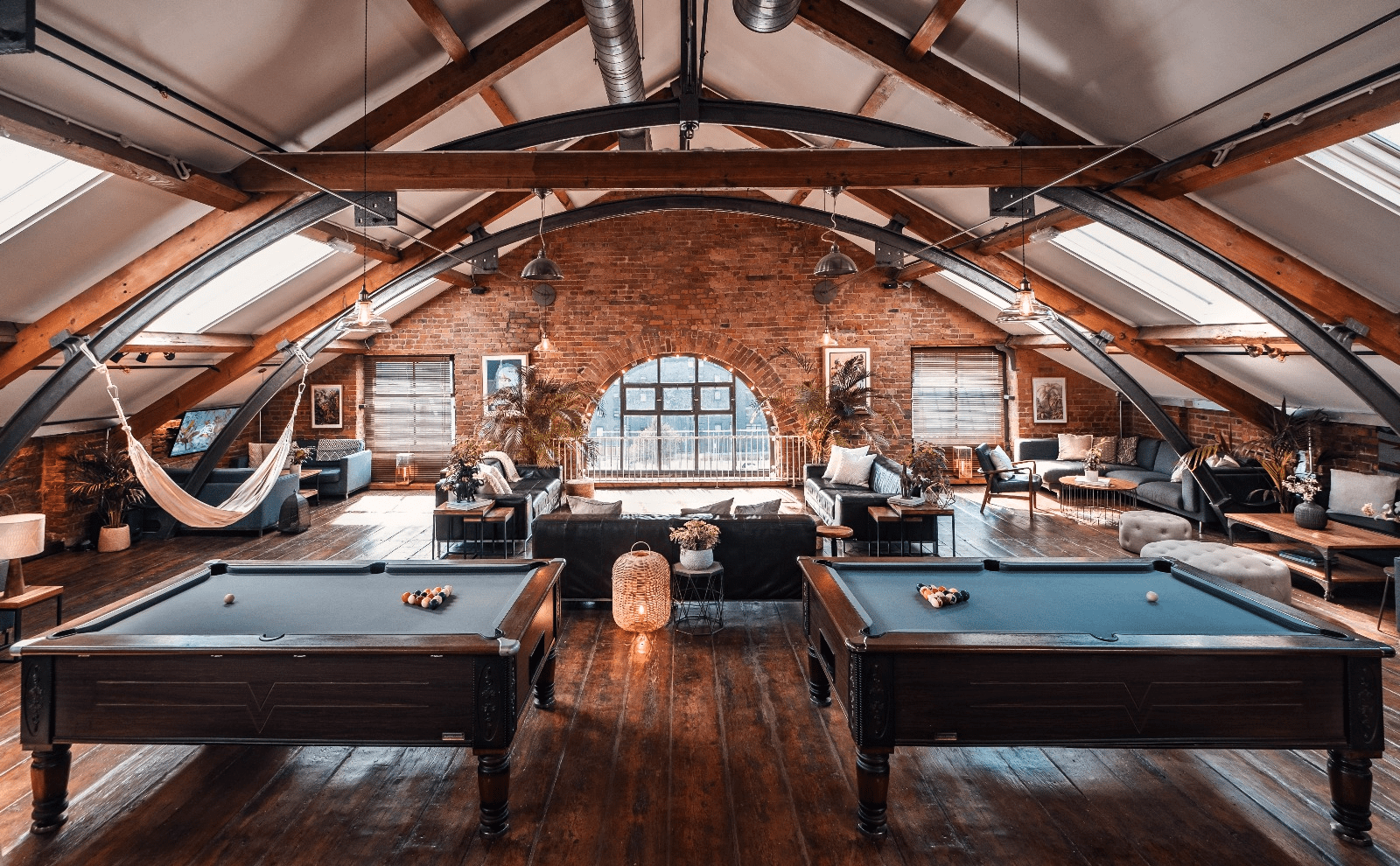
Once, weaving looms hummed in this building. “Beehive Mill” was one of Manchester’s key textile mills in the 19th century. In the 21st century, it is a prestigious complex that has preserved its brick façades, massive wooden beams, and arched windows. Spacious lofts with high ceilings combine the industrial past with modern comfort.
“The Royal Mills”, Ancoats
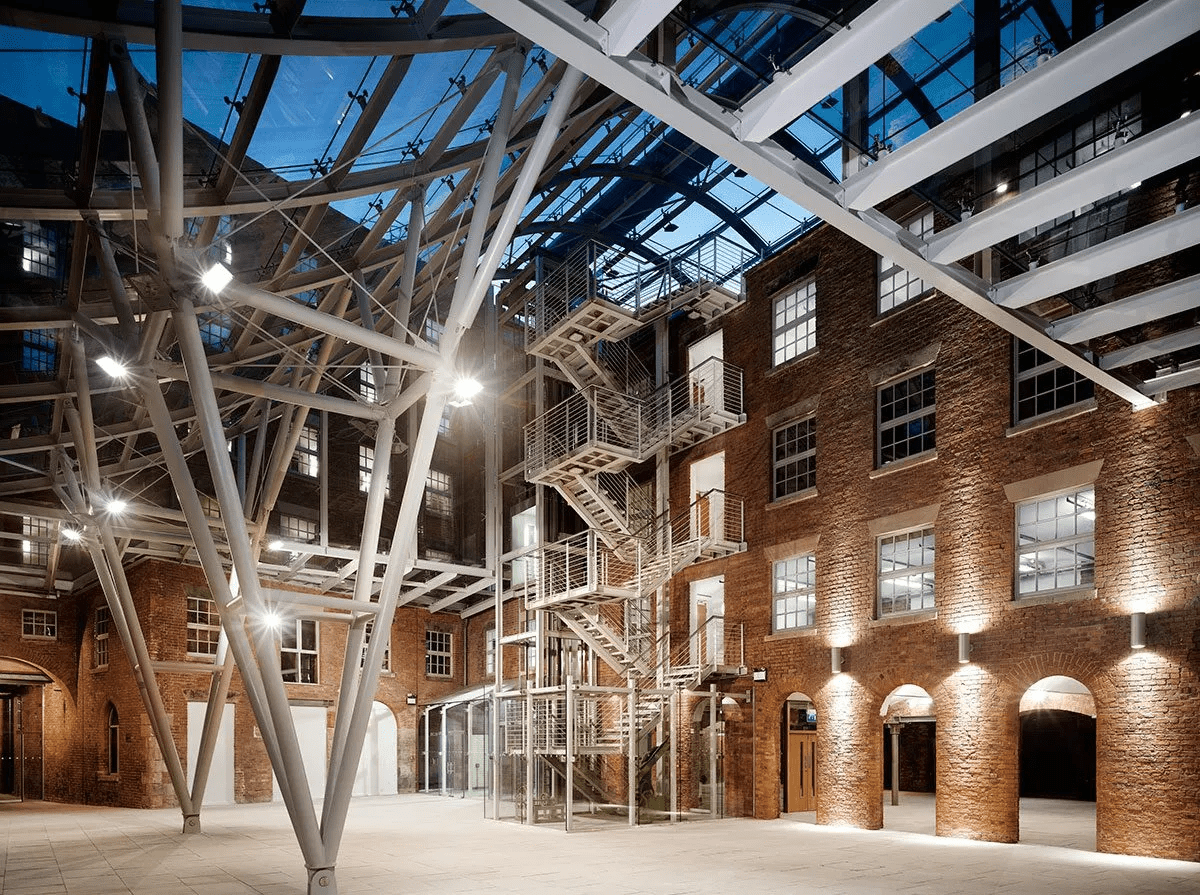
“The Royal Mills” complex is an example of a true architectural masterpiece among loft dwellings. A textile mill used to operate here, and it is now a residential and commercial quarter where original elements have been preserved: cast-iron columns, brickwork, and an internal courtyard that has become a cosy public square with cafés and boutiques.
“Smithfield Building”, Northern Quarter
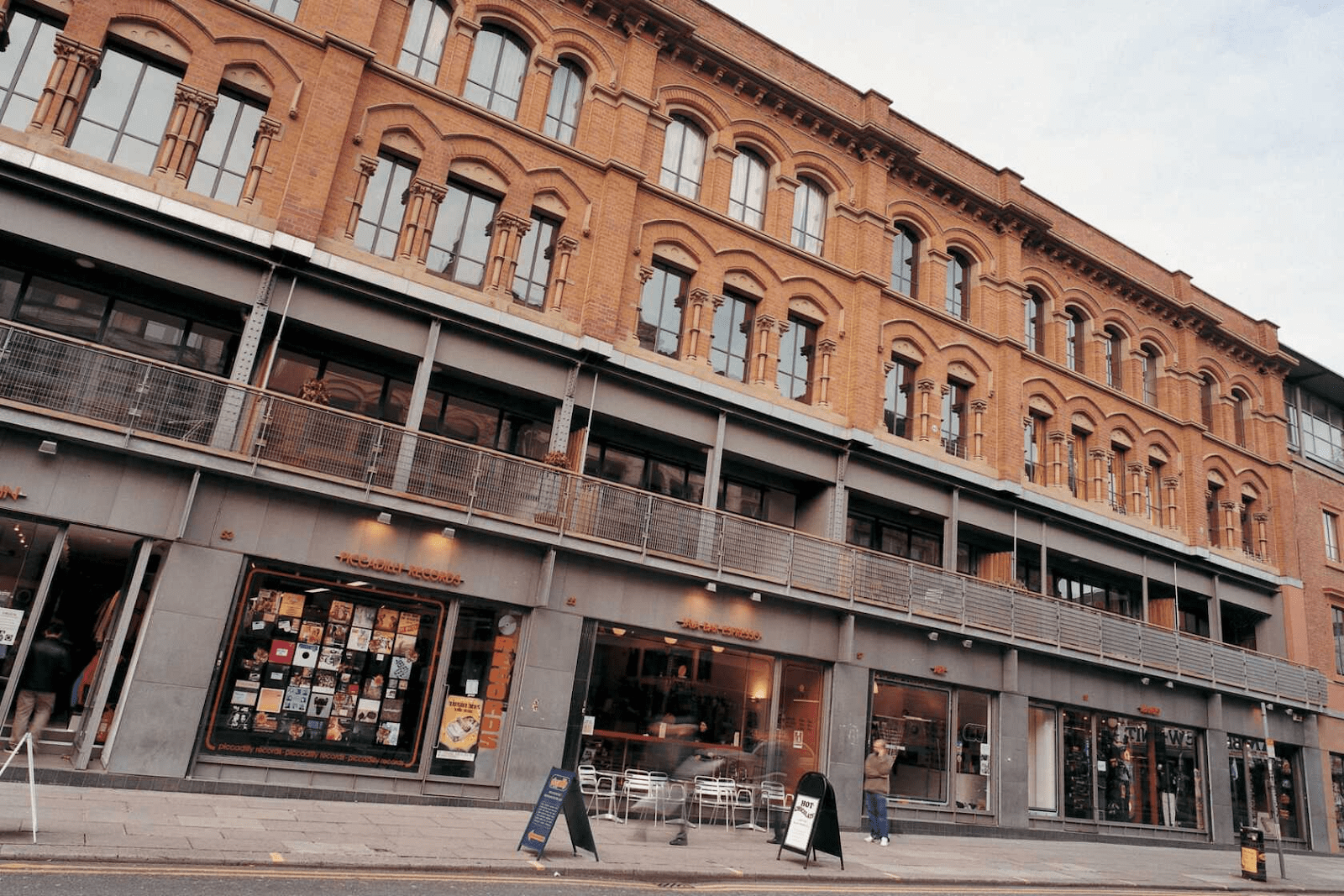
This former market and warehouse became one of the first landmark revitalisation projects in Manchester. In the 21st century, the “Smithfield Building” combines lofts, art spaces, and studios, fitting perfectly into the creative atmosphere of the Northern Quarter.
“Murray’s Mills”, Ancoats
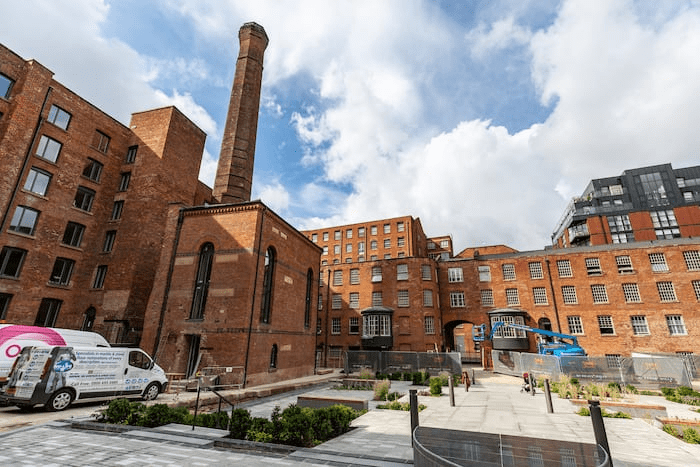
These are the oldest steam-powered cotton-spinning mills not only in Manchester but in the world, dating back to the late 18th century. After long years of decline, “Murray’s Mills” was transformed into a luxurious residential complex with amazing lofts, preserving historical details and offering panoramic views of the canal and the city.
All these examples of revitalisation and gentrification show that in Manchester, old buildings are not demolished; they are given a second life. Thanks to this, the city not only preserves its architecture but also creates a unique space where history and modernity successfully coexist under one roof.
In the 2020s, Manchester is a city setting a huge example, where new developments often incorporate historical elements rather than destroying them. Architects and developers are encouraged to think creatively, not destructively.
Life in factories and warehouses in Manchester has transformed from a trend into a core part of the city’s DNA. What’s more, when you live in a converted warehouse, you are not just occupying a space; you are continuing its story.
- https://beehivelofts.co.uk/
- https://bohm.uk/article/manchester-city-centre-s-first-warehouse-conversion-a-resident-s-insight/
- https://www.creativetourist.com/venue/smithfield-market/
- https://www.onthemarket.com/content/what-is-gentrification/?gad_source=1&gad_campaignid=20985605685&gbraid=0AAAAAqpRXFuqXv_xiDeUA4R8EXNd9r0QP&gclid=CjwKCAjwx8nCBhAwEiwA_z__08e9njRJSAAEFkhA2BVQ1ZEXZZT8qpNeT4JdhRIzX50U9WmLzoHI4hoC-_4QAvD_BwE
- https://damianfieldarchitects.co.uk/royal-mills/
https://www.urbansplash.co.uk/regeneration/projects/smithfield-buildings