

Manchester, a city of contrasts, boasts not only a rich industrial heritage but also an extraordinary architectural legacy. Unique architecture here isn’t limited to historic factories and canalside mills—it also includes magnificent old houses and mansions. Among Manchester’s architectural treasures, Slade Hall, a stunning 16th-century historic building, holds a special place. This remarkable structure is a prime example of Elizabethan architecture, exuding timeless elegance and embodying the spirit of a bygone era. Let’s explore the rich history and architectural beauty of Slade Hall, diving into its unique Elizabethan design elements. Next on manchester-future.
Historical Origins of Slade Hall
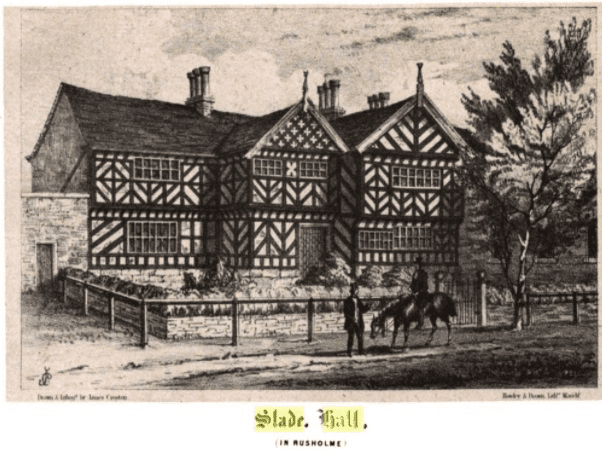
Slade Hall was constructed around 1585 by the Siddall family, prominent local landowners who aimed to build a grand residence reflecting their social status. The house was named after the Slade family, who previously owned the land on which it was built.
The area surrounding Slade Hall has a far longer history. Previously known as Milkwall Slade, the land was owned by the Slade family from the mid-13th century until the reign of Elizabeth I. Their estate included 24 acres in Rusholme and 20 acres in Gorton, both part of Manchester.
In 1583, the property was sold to the Siddall family. Over the next two years, the family undertook construction of the new mansion. The estate’s location in the Gorton area of Manchester was chosen for its strategic proximity to both the city and the countryside. The Siddall family and their descendants resided in the mansion for nearly 300 years.
Architectural Features of Slade Hall
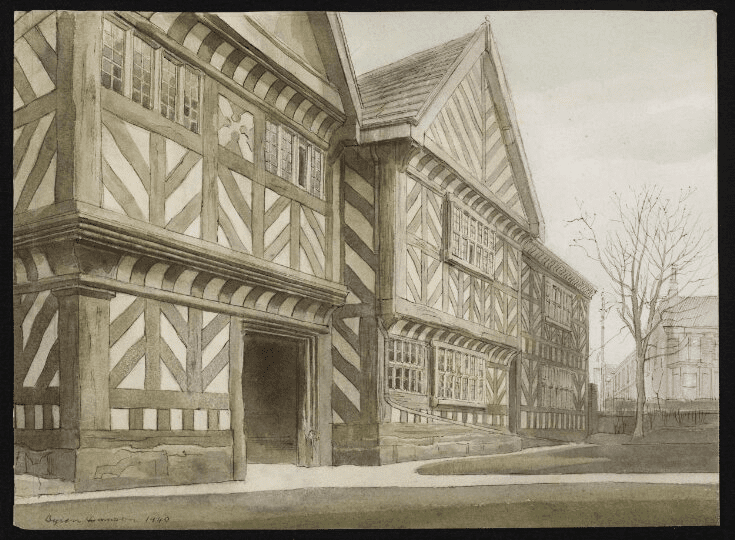
Elizabethan architecture is renowned for its intricate details, symmetrical designs, and a blend of Gothic and Renaissance elements. Slade Hall embodies these principles with its striking façade, richly decorated interiors, and sturdy construction. The building materials, primarily timber and clay plaster, reflect 16th-century construction techniques typical of Manchester.
The mansion is built on a stone foundation, following a hall-and-cross-wing plan. Behind the house are several brick extensions, along with a slate roof and a 19th-century wing added to the right side of the original building. Initially, Slade Hall was a single-storey structure, with the upper floor added later.
The Unique Façade of Slade Hall
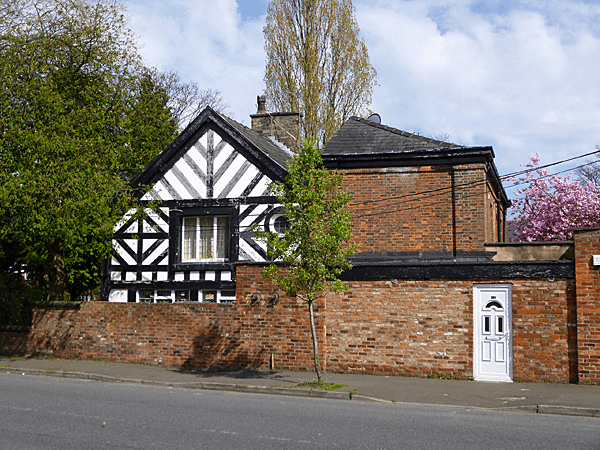
The façade of Slade Hall is a prime example of Elizabethan design, featuring large mullioned windows, decorative gables, and a central entrance adorned with intricate carvings. The structure’s symmetry is accentuated by evenly spaced windows and a balanced arrangement of architectural elements. The use of timber framing, a hallmark of Elizabethan architecture, adds aesthetic charm and structural integrity to the mansion.
The timber frame consists of posts and rails with diagonal braces resembling “herringbones,” positioned between structural beams. The porch, located at the corner between the main gable and the south wing, features original diamond-patterned painting reminiscent of quatrefoils.
16th-Century Interior
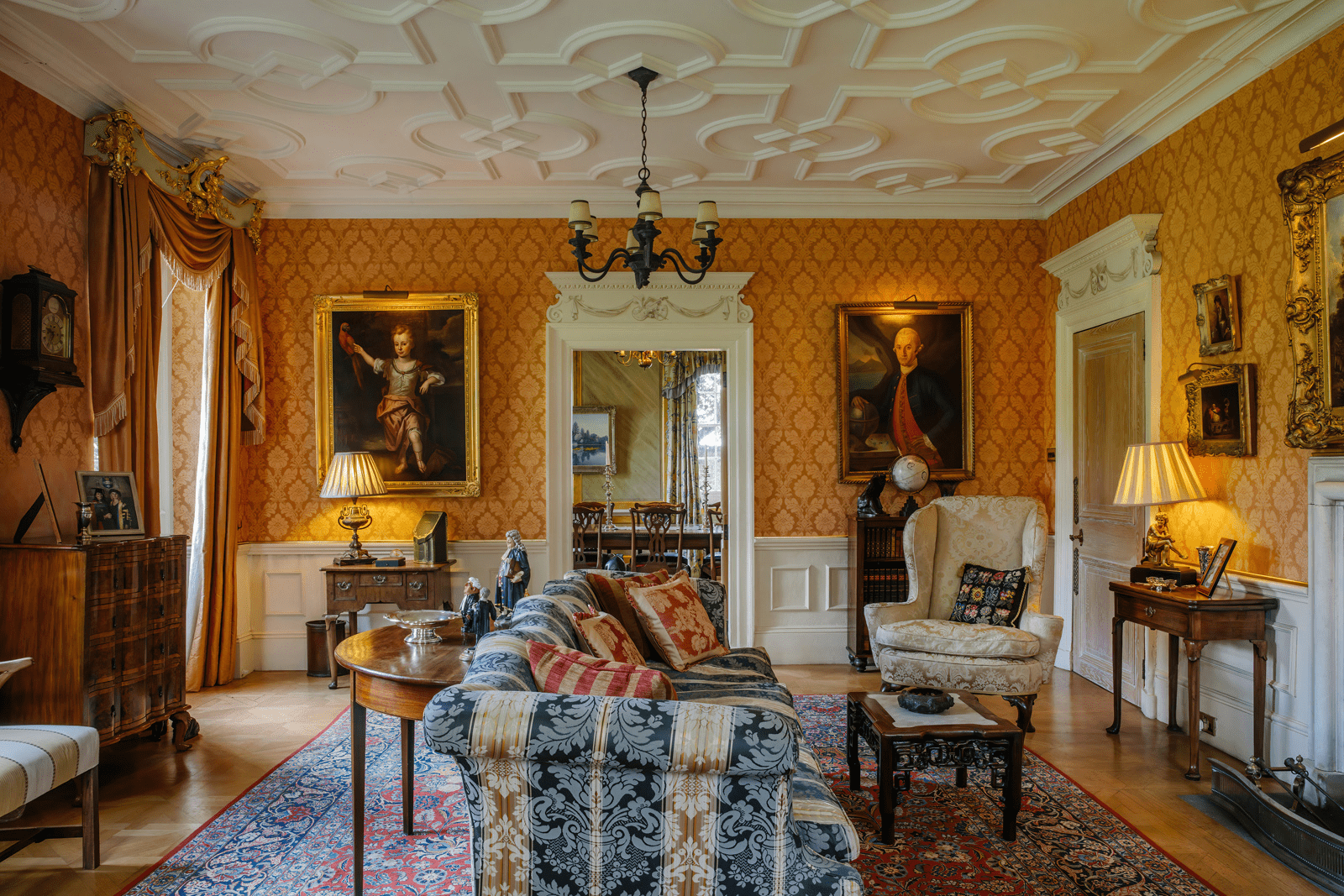
Entering Slade Hall feels like stepping back in time. The interiors boast exposed wooden beams, showcasing the craftsmanship of the era. The great hall, the centerpiece of the mansion, features a high-beamed ceiling and a large fireplace that once served as a gathering spot for family and guests. Wood-paneled walls and elaborately decorated ceilings in the dining and living areas further highlight the meticulous attention to detail characteristic of Elizabethan design.
The mansion’s main hall includes two four-light wooden casement windows. On the left, a restored post-and-rail window with fourteen lights can be seen, while the right side features a three-light window. On the ground floor, the cross-wing to the right includes ten-light post-and-rail windows, while the upper floor showcases twelve-light ones.
Notably, original plaster friezes in the hall remain remarkably well-preserved to this day. These friezes feature heraldic motifs, often depicting Elizabethan crests and family coats of arms. Additionally, they include “recreational” hunting scenes, offering insight into the leisure activities of the era.
Despite its rich history and architectural significance, Slade Hall was listed as a Grade II building of national heritage only in 1952.
Historical Significance and Preservation of Slade Hall
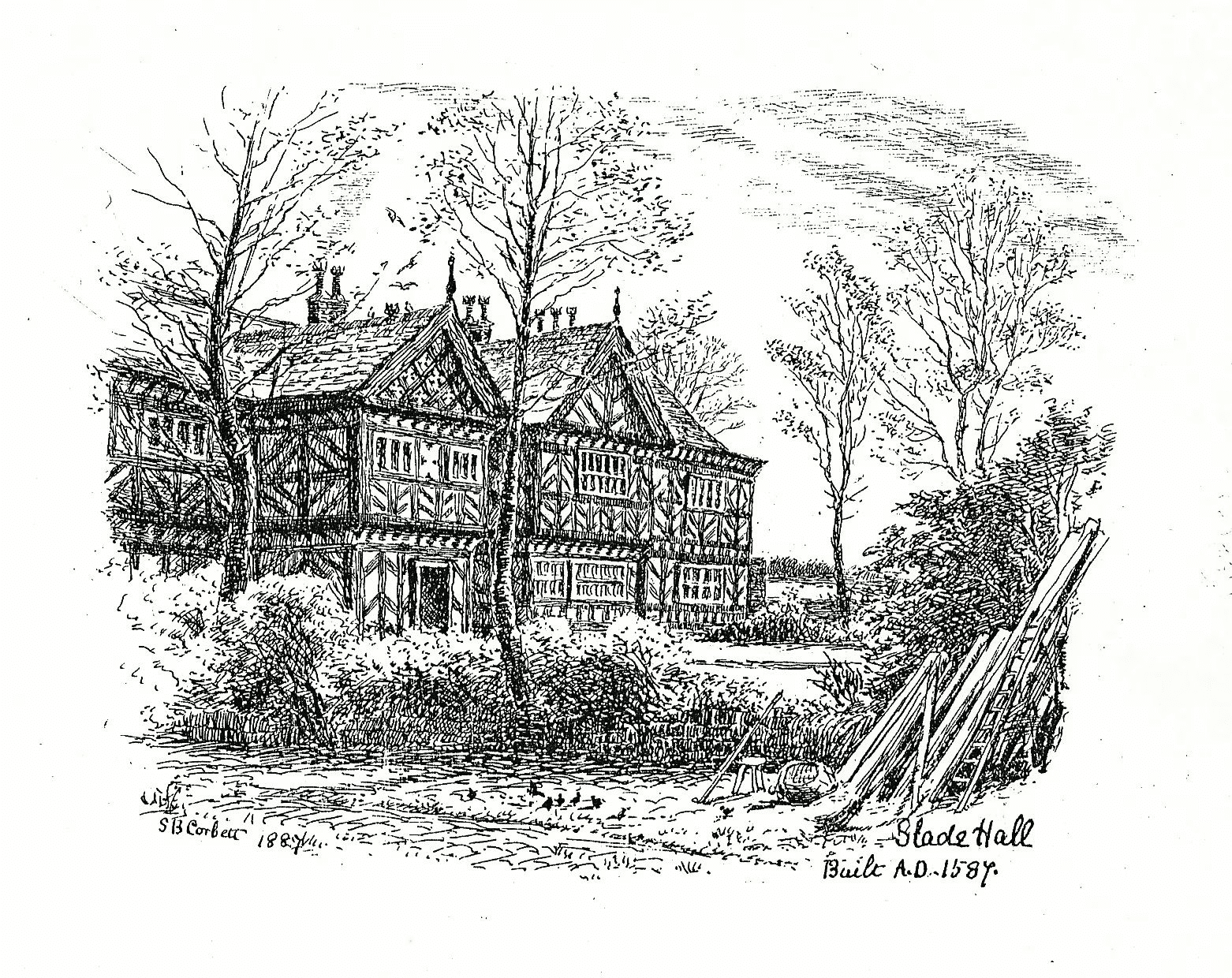
The significance of Slade Hall extends beyond its architectural features. It serves as a unique cultural landmark that has borne witness to centuries of social and political change in this industrial city. Local historians report that during the English Civil War, the great hall served as a refuge for Royalist supporters, adding a legendary dimension to the mansion’s historical past.
Over the years, Slade Hall has undergone numerous restorations, necessary to preserve its unparalleled architectural integrity. Efforts to maintain the hall’s original features while adapting it for contemporary use have played a critical role in ensuring the mansion’s longevity. Today, Slade Hall stands as a protected historical site, inviting visitors to marvel at the unique design and craftsmanship of the Elizabethan era.
Legacy of Elizabethan Architecture in Slade Hall
The legacy of Elizabethan architecture, as exemplified by Slade Hall, lies in its ability to combine functionality with cultural expression. The architects and craftsmen of the era created structures that were not only practical but also visually striking. Moreover, they succeeded in crafting an architectural masterpiece that remains relevant in the 21st century. This balance of form and function is evident in the design of Slade Hall, where every element serves a purpose while retaining historical significance.
The Elizabethan architectural style of the mansion also reflects the social and cultural influence of the families of the time. Grand mansions like Slade Hall symbolised the wealth and influence of their owners. The elaborate details and luxurious interiors were markers of prosperity and sophistication.
Modern History and Sale of Slade Hall
In the 1990s, Slade Hall housed the offices of the Partington Housing Association. By the early 21st century, the unique mansion was listed for auction. In 2002, it was purchased by developer Mel Evans for £527,000. Following the acquisition, the mansion’s hall was subdivided into shared accommodations for 14 residents. A subsequent sale in 2005 included a condition for further restoration.
Since the 16th century, Slade Hall has passed through the hands of many owners, yet its unique significance to the city endures and will continue to do so for centuries.