

A place has emerged in the very heart of Manchester that demonstrates how bold ideas can completely change the face of a city. The Castlefield Viaduct—a former Victorian railway bridge that was once part of Manchester’s industrial power—stood neglected for decades. Trains long stopped running, the structure became overgrown with grass, and the metal trusses simply rusted in the rain. However, in the 2020s, the bridge was given a chance for a second life, and its transformation has impressed even the most sceptical city dwellers. Find out more at manchester-future.
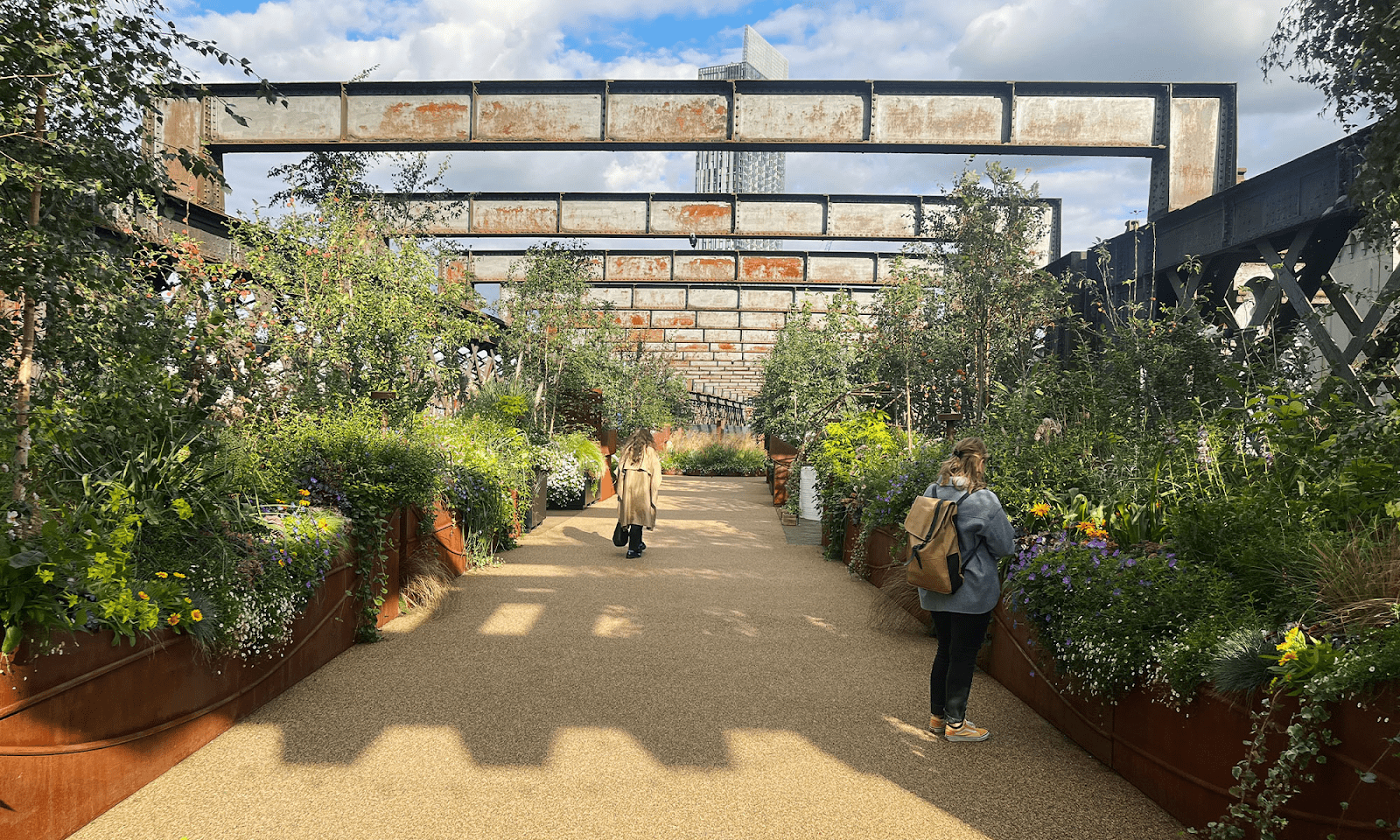
In 2025, the Castlefield Viaduct is an open-air green terrace, an elevated garden stretching for hundreds of metres along the historic structure. Landscape designers and urban planners have given the bridge a new function: where railway carriages once rumbled, dozens of species of plants, flowers, and shrubs now grow, creating small natural oases right in the middle of the city. People come to the viaduct to walk, relax, take photos, observe the city from above, or simply find a few minutes of quiet.
This location is more than just a beautiful spot. It is a symbol of how a modern city can combine heritage and innovation. Architects preserved the original Victorian supports and metal structures while equipping the space with the latest solutions: monitoring systems for plant condition, sensors for moisture, lighting, and temperature, as well as technologies that help maintain the garden in the most ecological way possible.
The Castlefield Viaduct has become an example for other cities of how to creatively reimagine post-industrial sites—not by destroying them, but by breathing new meaning into them. After all, innovation does not always start with building something new—sometimes it is born where someone dared to see potential in the old.
Victorian Roots: Why the Castlefield Viaduct was Important for Manchester
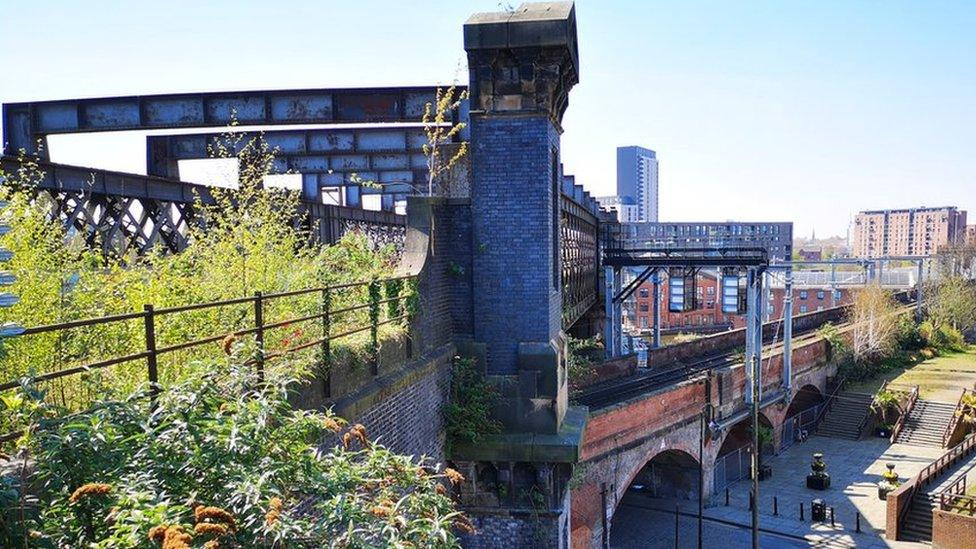
The bridge was built in 1893 by the company Heenan & Froude to alleviate traffic flow in what was the world’s most industrial city. This was a time when Manchester was literally smoking with factories, and railways had become its arteries. The viaduct was of strategic importance: its 330-metre length allowed trains to cross crowded quarters without delays, connecting industrial zones and warehouses.
The structure was noted not only for its functionality but also for its aesthetics—the metal framework with its masterful riveted joints became a symbol of the engineering might of the era. For decades, thousands of carriages passed over the bridge, but with the development of motor transport and the city’s reconstruction, the need for it diminished. In 1969, the viaduct was closed. Left to its own devices, it very quickly became a forgotten part of the landscape—until the 2020s, when Manchester turned its attention to it once more.
How a Derelict Bridge Became an Innovative Urban Space
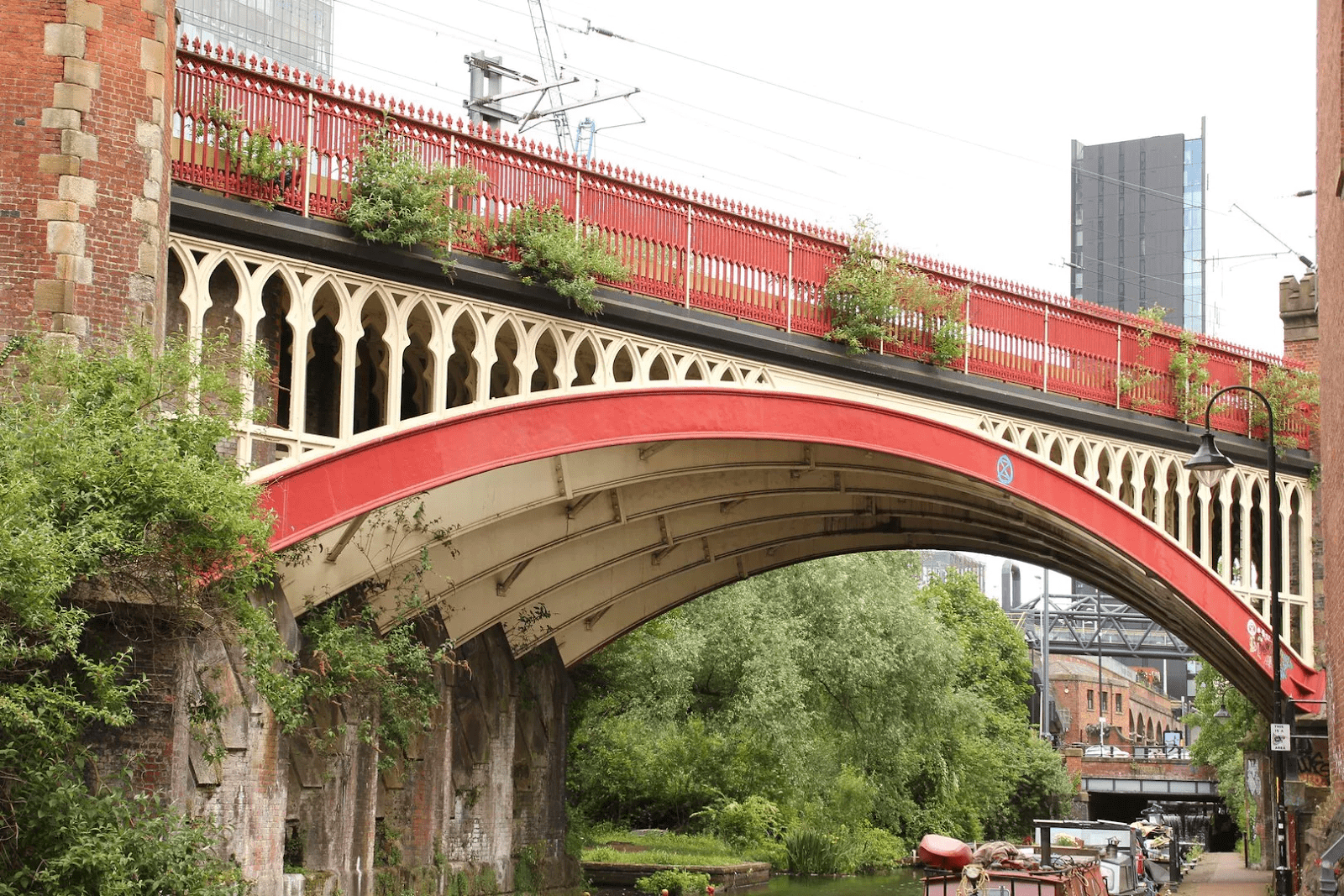
The situation changed dramatically in 2021 when the National Trust presented a bold idea: to transform the old Victorian bridge into a modern, innovative park—a green space created at a height above the city. The idea was not new globally: New York’s “High Line” park had already set an example for the successful reinterpretation of industrial infrastructure. But for Britain, this was an absolutely pioneering step.
The grand transformation began. Engineers strengthened the metal structures, designers created a concept of mixed vegetation, and ecologists selected species that could comfortably grow at height. The bridge turned into a linear green gallery: gardens, patches of wild plants, viewing terraces, and exhibitions dedicated to the ecology and history of Manchester appeared here.
The pilot phase opened in 2022, and from the very first days, the location became a real magnet for tourists, photographers, and city residents. People came here not just for nature, but for new meanings—to feel how old architecture could gain a second life.
The Fusion of Heritage and Innovation: What Makes the Park Special
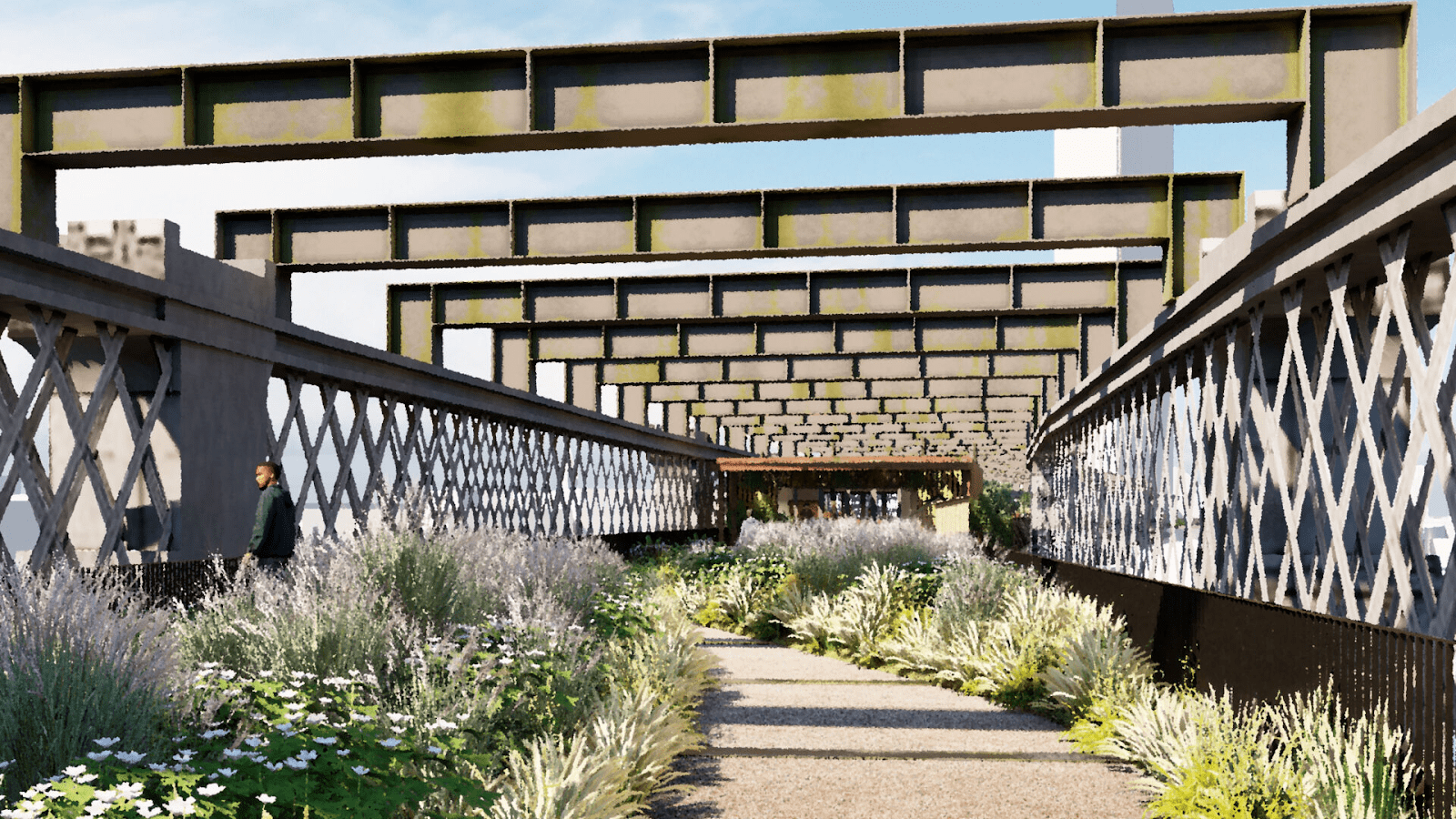
The Castlefield Viaduct is an example of how a derelict industrial structure can get a new lease of life and become a symbol of modern urban development. The majestic Victorian construction has been transformed in the 2020s into a suspended garden, where history and technology coexist as naturally as if they had been part of a single project from the very beginning.
A “smart” nature care system operates on the viaduct: sensors measure soil moisture, plant condition, temperature, lighting levels, and rainfall. Engineers and landscape designers see everything in real-time, so plants receive exactly as much water and light as needed—without unnecessary resource expenditure and without overloading the ecosystem. This allows the garden to be maintained in excellent condition even at a great height, where conditions can be more challenging than on the ground.
The viaduct has become not only a green space but also a research platform. Scientists are studying how walks in such an unconventional environment affect mental health: whether they reduce stress levels, improve sleep, concentration, and general well-being. People describe this space as a place where the head “reboots,” and the noise of the city remains somewhere below.
Yet, despite all the technological solutions, the most important thing here is the feeling that arises when you stand on a structure built over a century ago and see it supporting an entirely different, new life. Victorian supports are juxtaposed with contemporary green installations, and this contrast creates a special atmosphere—as if the city itself is showing that it honours its past and boldly moves forward.
The Castlefield Viaduct is not just a park. It is proof that old structures can become the foundation for the boldest innovations if they are given a chance.
The Future of the Castlefield Viaduct: A Temporary Project with Every Chance of Becoming Permanent
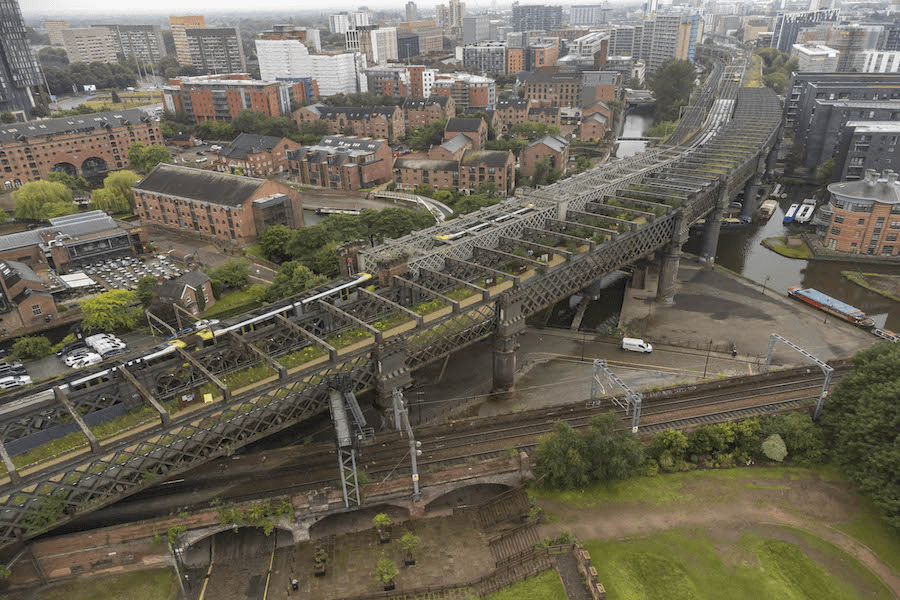
The current version of the park is a pilot, conceived as a test model. In July 2023, Manchester City Council granted the National Trust additional time to operate the experimental park on the viaduct—permission was extended until winter 2024. Meanwhile, landscape architects from the BDP studio prepared a concept for the next phase of the space’s development, outlining a vision for what the viaduct should become in the future.
In September 2024, the first official details of the large-scale expansion emerged—the park was planned to be extended from the current 120 metres to the full length of the historic structure. During this period, an application was submitted to the City Council for the construction of the second phase of the project and a petition for granting it architectural heritage status. Permission for the realisation of the second phase was successfully obtained in April 2025.
In July 2025, the National Trust announced the securing of more than £2.5 million in funding from the National Highways historical railway asset management group, Manchester City Council, the Greater Manchester Combined Authority, and the Railway Heritage Trust. Construction and structural work was scheduled to begin in the autumn, with the opening of the new section of the viaduct planned for summer 2026.
From September 2025, the sky park on the Castlefield Viaduct will become a key element of the large-scale “CyanLines” initiative—a strategic programme for creating a 160+ kilometre network of interconnected green spaces, water routes, and pedestrian paths covering the whole of Greater Manchester.