

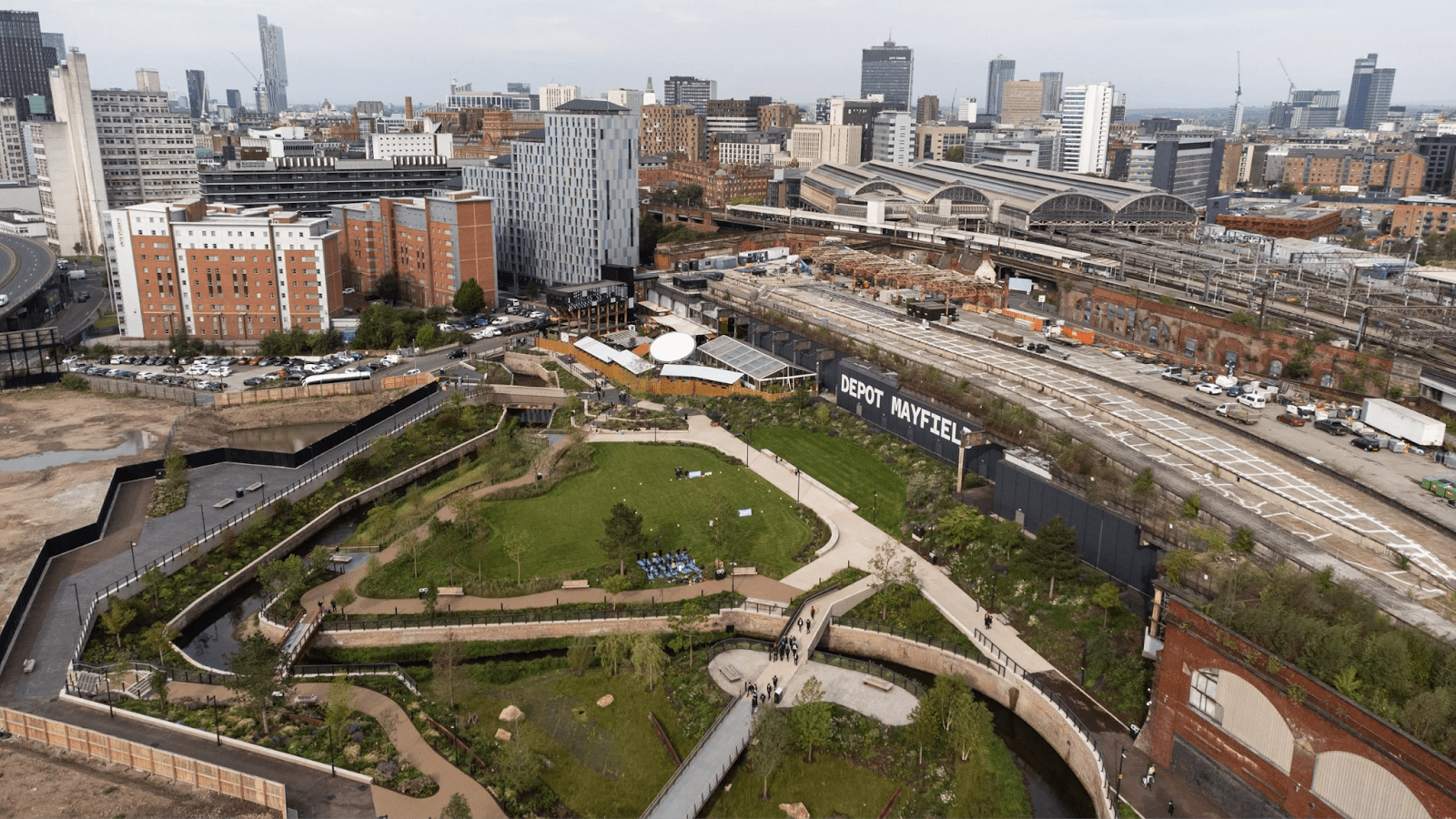
Mayfield Park is not merely another green space in Manchester. It is the first new park in the city centre in over a century. Officially opened on 22 September 2022, it immediately transformed into a unique symbol of a new stage in urban development. At a time when metropolises around the globe are fighting for every patch of greenery, Manchester has created not just a space for walking and relaxation, but a true 21st-century innovative marvel — a park that thinks, learns, and reacts. Read more on manchester-future.
We are talking about the AI Garden, the country’s first public ecosystem where vegetation, soil, water, air, and even the microclimate are under the constant supervision of complex analysis systems and smart sensors. Here, artificial intelligence acts as the gardener — attentive, precise, and infallible. It records the slightest changes in the condition of trees, predicts risks to the ecosystem, monitors pollution levels, and tracks moisture and soil quality, helping to care for the park in a way that was never before possible in an urban environment.
While other nations are merely experimenting with similar concepts, Manchester is boldly implementing them in real space, setting an example for urbanists worldwide. In the 21st century, Mayfield Park is regarded not simply as a park, but as the most advanced open-air innovation laboratory, where a new format of big-city living is being born.
A Historical Note
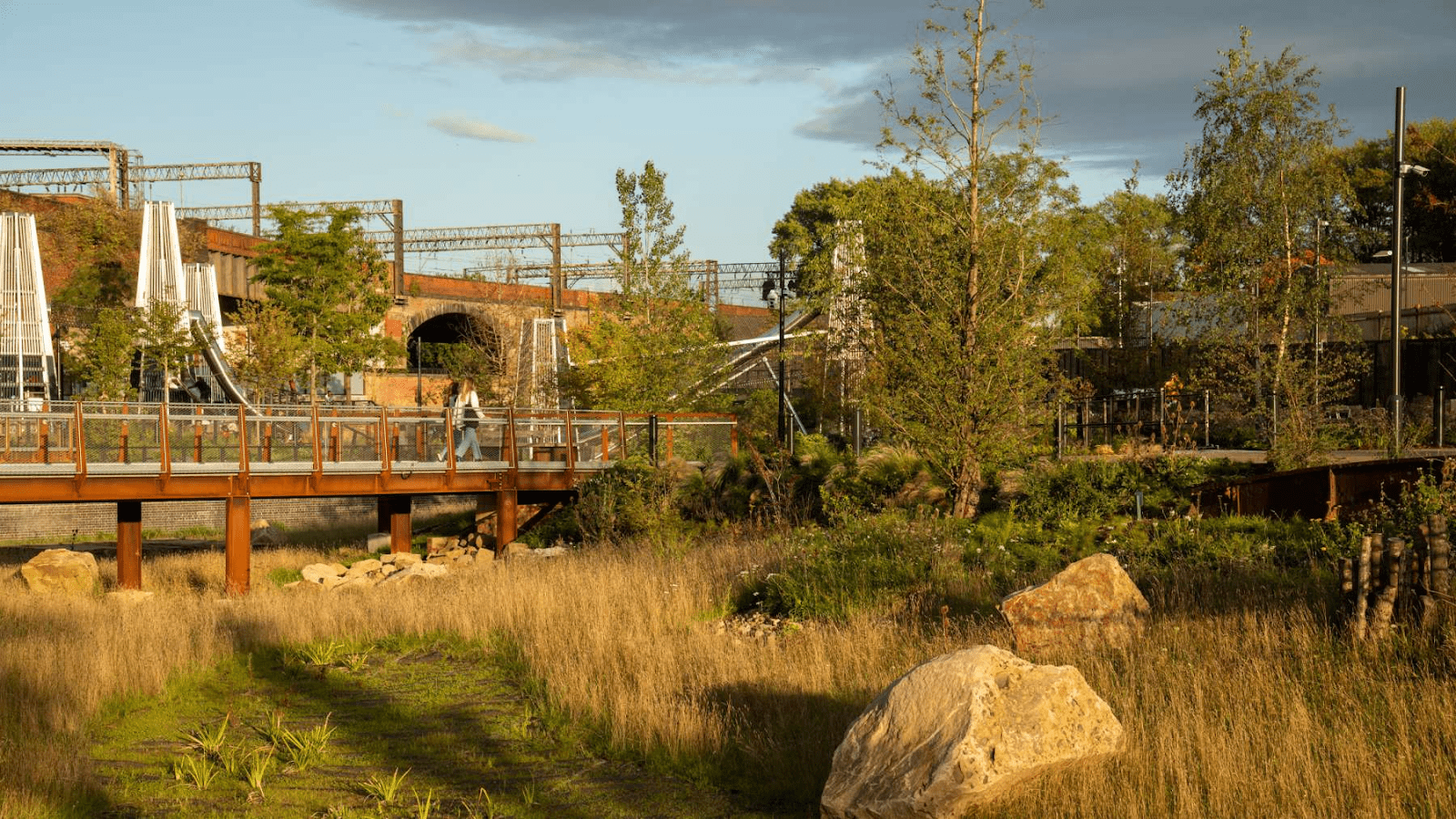
After a long period of neglect since the 1980s, the Mayfield district has gradually returned to life as part of a major regeneration programme. The project envisages the construction of approximately 1,500 new homes, the creation of retail, office, and leisure spaces, and a complete renewal of the territory.
The development and realisation of the park concept took over six years. In 2020, the UK Government allocated £23 million from the Getting Building Fund — one of the largest investments within a single project — to support the construction of Mayfield Park as part of the economic recovery strategy following COVID-19. That same year, archaeologists from the University of Salford discovered the remains of the historic Mayfield Baths — two large tiled pools located on the modern-day Baring Street.
The project was delivered by the Mayfield Partnership — a public-private joint venture comprising U+I, Manchester City Council, Transport for Greater Manchester, and the government organisation LCR.
The park operates under modern safety rules: since June 2023, smoking, vaping, barbecues, and alcohol consumption have been prohibited.
Furthermore, in 2025, it became a key part of the “CyanLines” initiative — a large-scale programme designed to connect urban green zones and create a 160-kilometre network of parks, waterways, and pedestrian routes across Greater Manchester.
Mayfield Park as a Next-Generation Smart Space
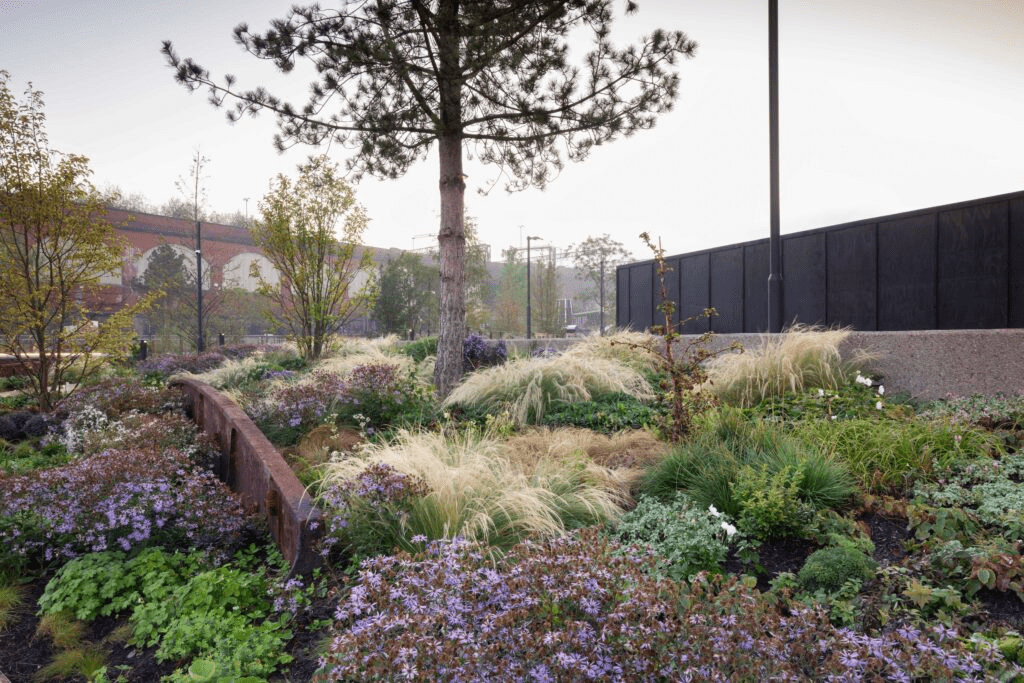
Mayfield Park was conceived not just as another green area for recreation. It is a territory where the potential for the development of intelligent systems was embedded from day one. It was designed as a park capable of learning and adapting. It is not only people who influence this space — the space learns to interact with people and nature.
Within a few years of opening, the park has become a “living laboratory” where sensors monitor plant vegetation rates, temperature changes, soil quality, and moisture levels. All of this allows for the prediction of seasonal fluctuations, the prevention of green spaces drying out, and responses to environmental threats before they become noticeable.
How the AI Garden Works: An Invisible Ecosystem of Smart Sensors
The AI Garden at Mayfield Park is not merely a modern green zone, but a complex technological organism that literally “senses” the park. Behind its operation lies an invisible infrastructure of sensors, analytical modules, and artificial intelligence algorithms that turn nature care into an exact science.
Hidden underground, on trees, in flower zones, and even within irrigation systems is a network of microsensors working around the clock. They gather information that usually remains unnoticed by the human eye:
- soil and air humidity;
- levels of sunlight and ultraviolet radiation;
- temperature fluctuations;
- soil pH and mineral composition;
- air quality and pollutant levels;
- plant growth rates.
Each plant species has its own “standard passport”. The system knows that the optimal moisture level for lavender is different from that required by young trees.
Effectively, this is a digital botanical profile that updates every second.
All data streams into the central module of the AI system. There, it passes through several stages of analysis. Consequently, the AI can predict when soil drying will begin, where fungal infections might develop, whether there is a risk of leaf damage due to air pollution, or if immediate irrigation adjustment is needed.
This is not simply monitoring — it is the anticipation of problems before they become visible to people.
The AI Garden at Mayfield Park creates a unique ecological dialogue between humans and nature. Technologies do not replace gardeners — they provide them with a high-precision tool to ensure every plant receives exactly as much water as it needs, enjoys the right conditions for growth, is protected from diseases, and maintains a natural appearance without chemical enhancers.
This allows for a reduction in water consumption by 30–40%, cuts down the use of pesticides, and preserves a healthy park ecosystem.
Why Mayfield Park Needs Artificial Intelligence: The Challenges of a 21st Century City
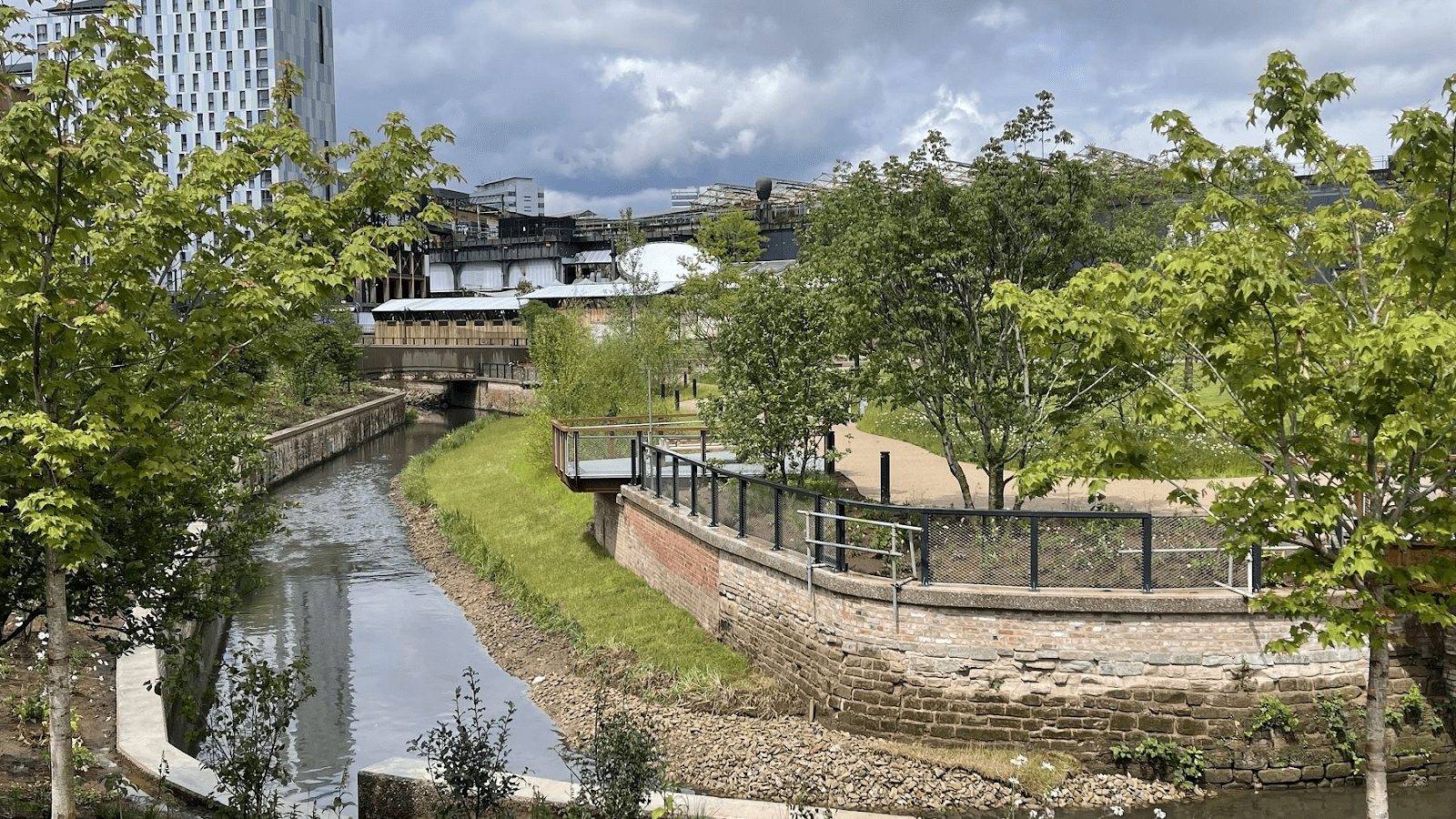
Manchester is developing actively, and as the city expands, the pressure on green zones increases. Climate change, abnormal temperature spikes, air pollution, and reduced rainfall create risks that traditional maintenance methods can no longer effectively offset.
Mayfield Park became the answer to these challenges. The AI system allows the park’s ecosystem to remain stable even during periods when natural conditions become unpredictable. This is not just greenery maintenance — it is a strategy for the long-term survival of urban landscapes.
Thanks to intelligent monitoring, the park is transforming into a resilient, self-regulating organism capable of adapting to climate changes.
The Future of the AI Garden: Manchester as a Model for Other Cities
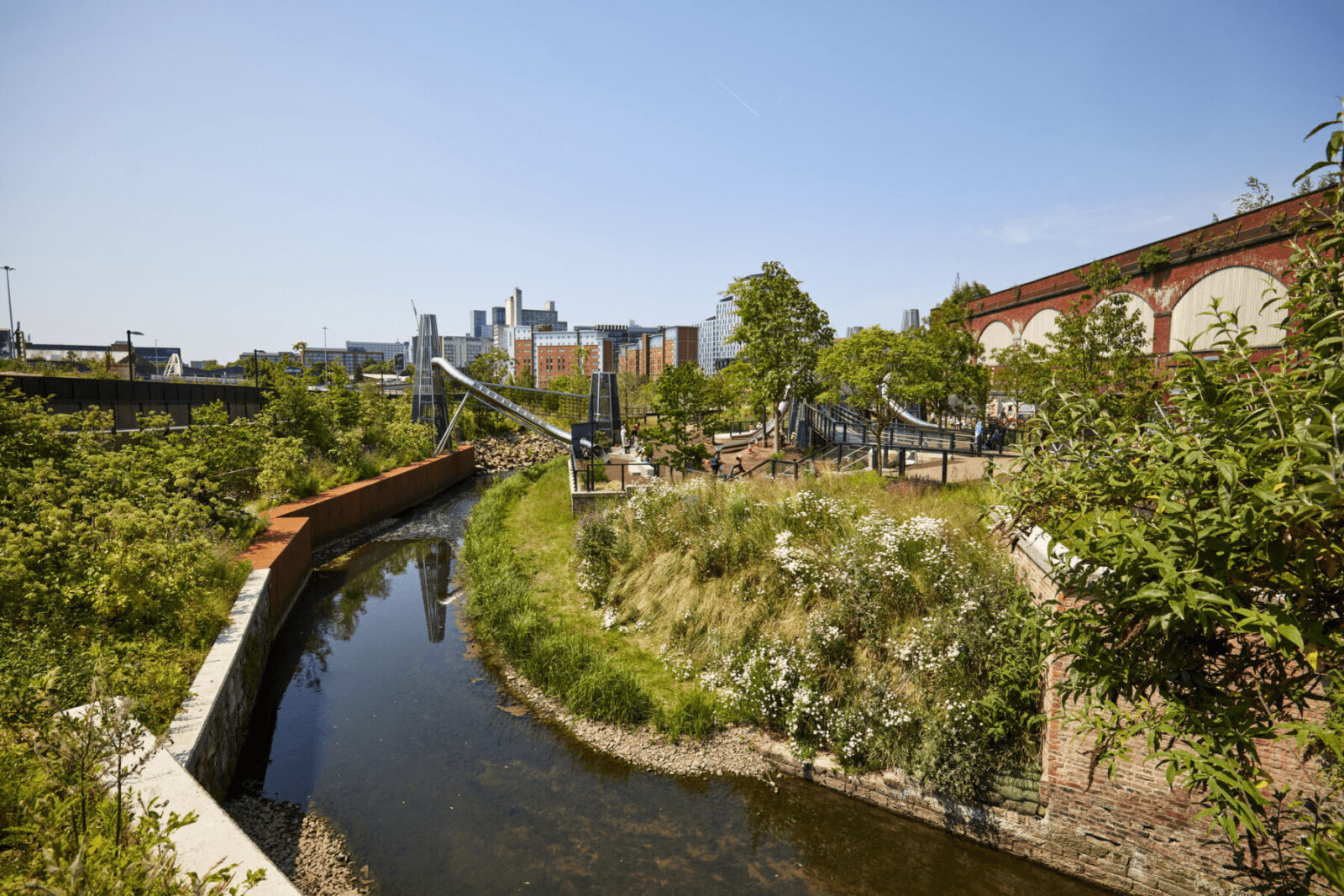
Mayfield Park is viewed as a model that can be adopted by other cities in the UK and abroad. A technological solution that began as an experiment is turning into an example of how modern infrastructure can interact with nature without harming it.
In the future, the system may gain broad capabilities: forecasting seasonal anomalies, automatic irrigation systems, creating environmental risk maps, analyzing the impact of transport on the environment, and more. Since its inception, the AI Garden has become not just part of the park, but a key player in the development of Manchester’s environmental policy.
This new stage of Mayfield Park’s development defines not only the appearance of the area but also the philosophy of the city. Here, nature ceases to be a decorative element and transforms into a value protected by the most modern innovative technologies.
Manchester is actively moving towards the status of one of Europe’s most innovative cities, and the AI Garden at Mayfield Park is clear proof of this. It demonstrates how cities can adapt to climate change, how technologies can make the care of green zones more efficient, and how digital tools are capable of reviving ecological culture.
In effect, Mayfield Park is the first step towards creating the next generation of “smart parks”, where nature and artificial intelligence work together to keep the city green, vibrant, and resilient.