

The history of Manchester is not just filled with bright chapters but also some dark ones. One such chapter unfolded on 6 February 1958, one of the most tragic days in the city’s history. On this fateful day, an aircraft carrying the “Manchester United” football team, along with journalists and supporters, crashed in Munich, Germany. This devastating crash claimed the lives of 23 people. Below is the detailed account on manchester-future.
Nothing Foretold the Tragedy
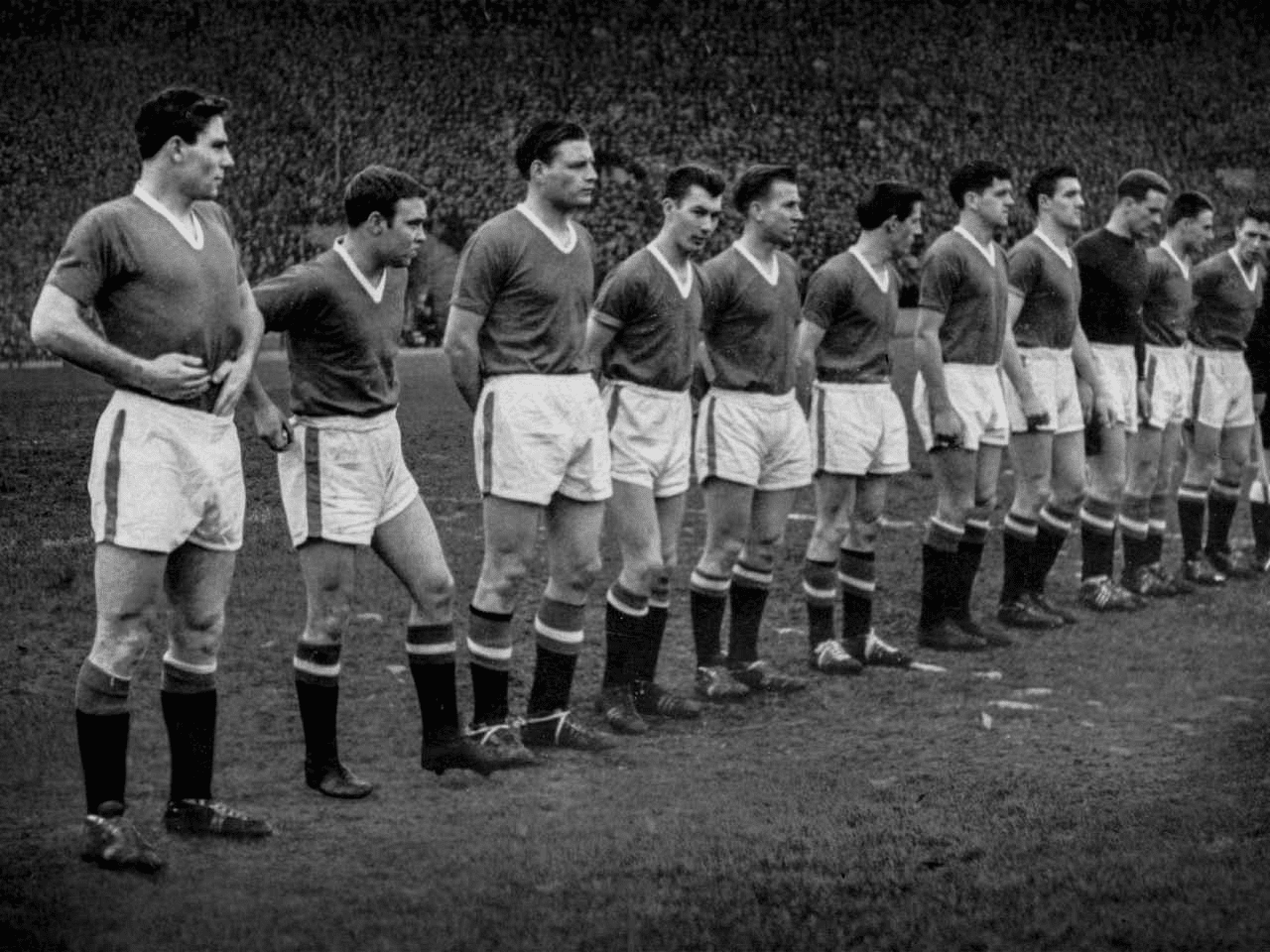
Before the tragedy, “Manchester United,” under the legendary footballer and manager Matt Busby, had successfully played a European Cup match against the Belgrade team Red Star. Busby and his team were off to a fantastic start during the 1957–1958 season, ready for another shot at winning the treble in Football League history.
The “Manchester United” team was often referred to as the “Busby Babes” because it was made up of exceptionally young players. Following their triumphant match in Belgrade, which secured them a spot in the semi-finals with a 3–3 draw (5–4 on aggregate), the mood was jubilant. Everyone on the team was brimming with hope and dreaming of further European glory. Sadly, that glory never came.
The Sequence of Tragic Events
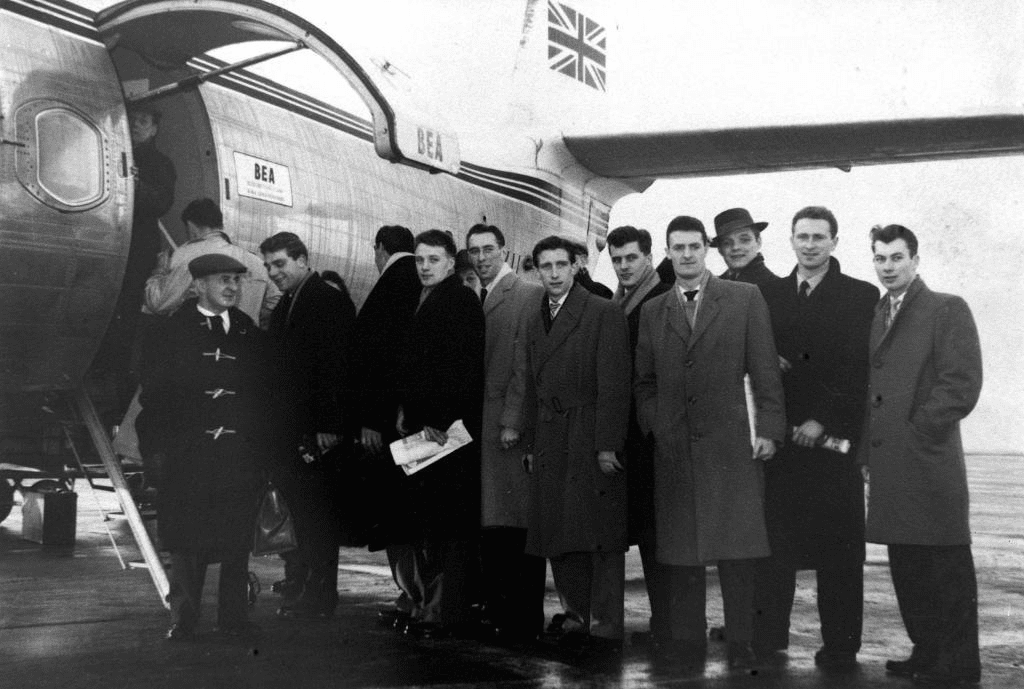
The aircraft that carried the “Manchester United” team was a British European Airways Airspeed Ambassador. As the team prepared to return to their home city of Manchester, the plane made a scheduled stop in Munich for refuelling. A direct flight from Belgrade to Manchester was beyond the aircraft’s range.
Once refuelled, the team boarded the plane at the Munich airport, preparing for departure. The flight was piloted by experienced aviators James Thain and Kenneth Rayment. However, things took a tragic turn on this ill-fated day.
After refuelling, the pilots aborted takeoff twice due to a sudden increase in pressure in the left engine. Concerned about their schedule delay, Captain James Thain refused an overnight stay in Munich and opted for a third attempt at takeoff.
By the time of the third attempt, snow had started falling, and a layer of slush formed at the end of the runway. This seemingly minor detail would prove catastrophic.
As the pilots made their third attempt, the aircraft failed to gain the necessary speed to lift off due to the runway slush. The plane breached the airport fence at the runway’s end and collided with a house, severing its left wing.
The tail section of the aircraft detached and struck a barn where a fuel tanker was parked, immediately sparking a fire that rapidly spread and led to an explosion.
Despite the chaos, Captain James Thain, fearing the plane might explode, began evacuating the passengers. Miraculously, goalkeeper Harry Gregg, who survived the crash, heroically pulled survivors from the wreckage.
The Aftermath of the Crash
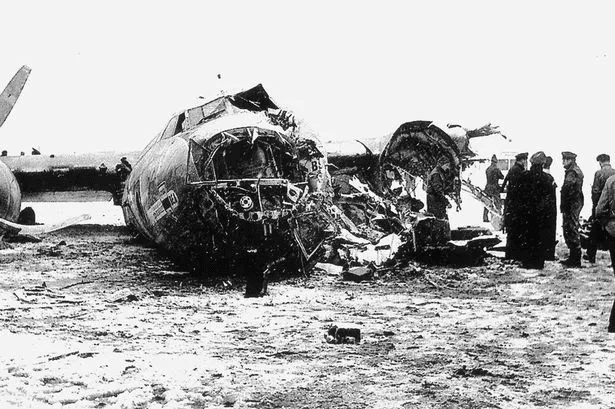
The crash had devastating consequences, with 23 of the 44 people on board losing their lives. Among the victims were eight players from “Manchester United”:
- Geoff Bent
- Roger Byrne
- Eddie Colman
- Duncan Edwards
- Mark Jones
- David Pegg
- Tommy Taylor
- Billy Whelan
The loss of this young squad was a severe blow, not only to the club but to the entire football community.
Other victims included Manchester United staff members, such as club secretary Walter Crickmer, trainer Tom Curry, and assistant coach Bert Whalley. Their deaths marked a dark chapter in Manchester’s football history.
Additionally, co-pilot Kenneth Rayment and two prominent Manchester journalists, Frank Swift and Donny Davies, also perished in the crash.
Initially, the crash investigation blamed the pilot’s error. However, subsequent findings revealed the real culprit was the slush on the runway, which caused the plane to decelerate and prevented it from reaching a safe takeoff speed.
The world was left reeling from the tragedy. The loss was staggering. Among the survivors was manager Matt Busby, who suffered severe injuries and had slim chances of survival. Players Bobby Charlton and Harry Gregg, despite their injuries, displayed extraordinary heroism in rescuing
Rebuilding After the Disaster
Miraculously, Matt Busby recovered after spending weeks in intensive care. He fought not only for his physical recovery but also grappled with profound guilt over the tragedy and the loss of his players.
After the crash, “Manchester United” faced the monumental task of rebuilding the team. The path to recovery was long and arduous. The club lost not just its players but also the sense of invincibility it once exhibited on the pitch. However, over time, the club managed to rise from the ashes and achieve new triumphs.
Since 1958, on 6 February every year, the club and its supporters observe a moment of silence to honour the memory of the players and staff who perished in the Munich air disaster.
This tragic chapter in Manchester’s history remains a powerful reminder of the fleeting nature of life and the resilience required to rebuild after such loss.